Table Runner from Old Jeans Pattern is one of the most creative and sustainable sewing projects you can try today. If you have old denim tucked away in your closet, transforming it into a stylish table runner from old jeans pattern is a practical way to reduce waste while adding personality to your home décor.
Repurposing denim has become increasingly popular in the world of DIY home décor. A recycled denim table runner not only gives new life to worn-out jeans but also creates a durable and versatile decorative piece. Denim’s natural strength, texture, and color variations make it perfect for projects that require structure and longevity.
Whether you want a rustic farmhouse look, a modern minimalist style, or a cozy handmade aesthetic, a table runner from old jeans pattern can be adapted to suit your taste. In this complete guide, you will learn how to prepare your materials, construct the base, customize the design, and finish your runner with professional touches.
Why Choose a Table Runner from Old Jeans Pattern
One of the main reasons to create a table runner from old jeans pattern is sustainability. Instead of discarding denim that is still usable, you can transform it into a practical décor piece. This approach supports eco-conscious living and reduces textile waste.
Another benefit is cost savings. Denim is often readily available at home, meaning you can create a beautiful recycled denim table runner without investing in expensive fabrics. Even small scraps can be combined into patchwork designs that look intentional and artistic.
Durability is a major advantage. Denim is known for its strength and resistance to wear. A denim table runner made from old jeans can withstand daily use, making it perfect for dining tables, coffee tables, or buffets.
The texture and natural fading of denim add character. Every pair of jeans has unique color variations, which means every table runner from old jeans pattern will be one-of-a-kind. This individuality enhances the charm of handmade décor.
Versatility also makes this project appealing. You can create a simple solid runner, a patchwork version, or even incorporate decorative stitching for added flair. The adaptability of a DIY denim table runner allows you to match any interior style.
Finally, this project offers a rewarding crafting experience. Working with recycled materials fosters creativity and a sense of accomplishment. Turning old garments into something new is both practical and emotionally satisfying.
Materials and Preparation for Your Recycled Denim Table Runner
Before starting your table runner from old jeans pattern, gather essential supplies. You will need old jeans, coordinating thread, sharp fabric scissors, pins, a sewing machine, measuring tape, and optional backing fabric for a finished look.
Begin by washing and ironing your denim. Clean, pressed fabric ensures accurate measurements and smoother stitching. Carefully cut along the seams to separate flat panels from the jeans. Removing thick seams makes sewing easier.
Determine the desired size of your runner. Standard dimensions range from 12 to 16 inches wide and vary in length depending on your table. Planning ahead helps you cut your denim pieces precisely for a balanced recycled denim table runner.
If you prefer a patchwork design, cut the denim into uniform squares or rectangles. Arrange them on a flat surface before sewing. This layout step allows you to visualize the final result of your DIY denim table runner.
Consider whether you want to include pockets or decorative elements from the jeans. Pockets can be sewn directly onto the runner for both visual interest and functionality. This adds personality to your table runner from old jeans pattern.
For added stability, you may use interfacing or a cotton backing fabric. Although denim is sturdy, backing provides a cleaner underside and helps the runner lay flat on your table.
Step-by-Step Sewing Guide for a Denim Table Runner
Start assembling your table runner from old jeans pattern by sewing the denim pieces together. Use a straight stitch and a strong needle designed for thicker fabrics. Press seams open after stitching to reduce bulk.
Once the top panel is complete, trim edges evenly. Straight, clean lines ensure a polished and professional-looking recycled denim table runner. Precision at this stage prevents uneven borders later.
If you are adding pockets or decorative stitching, now is the time to attach them. Secure pockets with reinforced stitches to maintain durability in your DIY denim table runner.
Place the denim top and backing fabric right sides together. Pin around the edges and sew, leaving a small opening for turning. This method creates a neat finish for your table runner from old jeans pattern.
Turn the runner right side out through the opening. Use a pointed tool gently to push out corners for sharp edges. Press thoroughly with an iron to smooth the fabric and enhance the overall appearance.
Finish by topstitching around the entire runner. This step closes the opening and adds decorative detail. A clean topstitch elevates your recycled denim table runner to a refined final product.
Creative Design Ideas and Styling Tips
There are countless ways to personalize your table runner from old jeans pattern. Mixing different denim washes—light, medium, and dark—creates a visually interesting gradient effect.
Consider adding contrasting stitching using white or bright thread. Decorative topstitching enhances the handcrafted look of your DIY denim table runner and highlights its structure.
You can incorporate fabric appliqué shapes such as stars, leaves, or geometric designs. These additions give a unique twist to a classic recycled denim table runner.
Another idea is to combine denim with other materials like linen or cotton. This contrast softens the texture and creates a balanced design in your table runner from old jeans pattern.
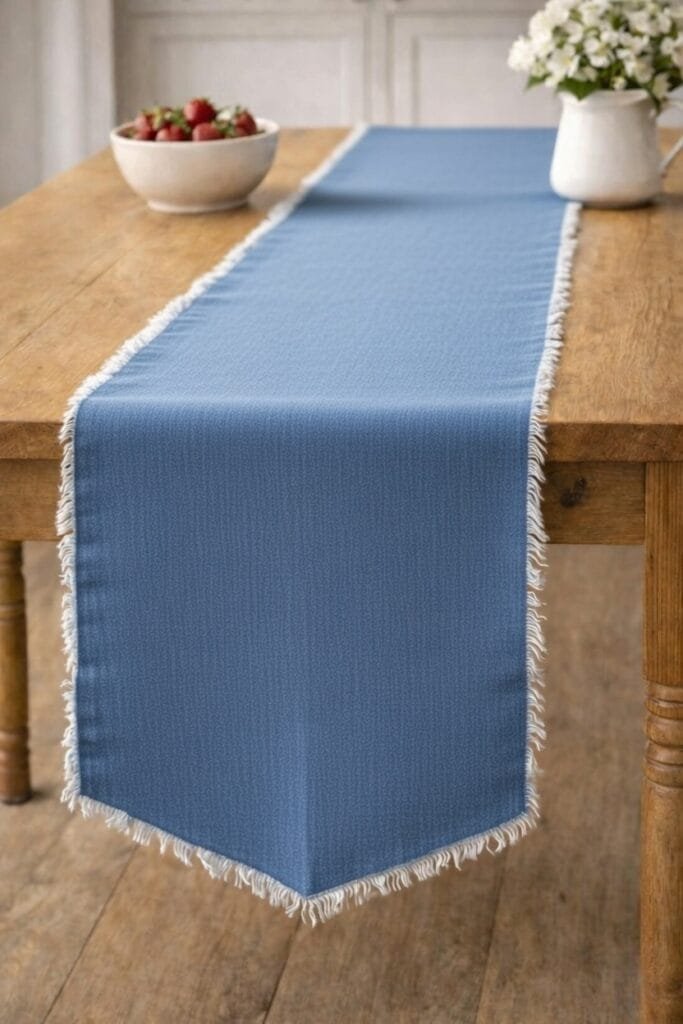
Frayed edges can also add rustic charm. Carefully controlled fraying along the seams gives a farmhouse-inspired look to your denim table runner.
When styling your finished runner, pair it with neutral tableware for a minimalist aesthetic or colorful dishes for a vibrant contrast. The adaptability of a DIY denim table runner makes it suitable for everyday use or special occasions.
FAQ About Table Runner from Old Jeans Pattern
Is a table runner from old jeans pattern beginner-friendly?
Yes, this project is suitable for beginners who understand basic sewing techniques like straight stitching and seam pressing.
What type of jeans work best?
Medium-weight cotton denim without excessive stretch provides the best structure for a recycled denim table runner.
Do I need special needles for sewing denim?
Using a denim or heavy-duty needle is recommended to handle thicker fabric layers in your DIY denim table runner.
How do I prevent bulky seams?
Trimming seam allowances and pressing them open helps reduce thickness in your table runner from old jeans pattern.
Can I machine wash the finished runner?
Yes, most denim runners can be machine-washed on a gentle cycle and air-dried for best results.
How long does it take to complete this project?
Depending on the design complexity, a recycled denim table runner can be completed in a few hours.
Conclusion
Creating a Table Runner from Old Jeans Pattern is a meaningful way to combine sustainability, creativity, and practical home décor. Throughout this guide, we explored the benefits of repurposing denim, essential materials, step-by-step sewing instructions, and creative styling ideas for your DIY denim table runner.
By transforming old jeans into a functional and stylish recycled denim table runner, you not only reduce waste but also craft something unique and personal. This project proves that simple materials can become beautiful décor with a little imagination and care.
VIDEO TUTORIAL
Now we would love to hear from you. Have you tried making a table runner from old jeans pattern? Share your honest opinion, suggestions, or creative variations. Your feedback can inspire others to start their own sustainable sewing journey.