If you’re looking for a creative, sustainable, and stylish sewing project, a Patchwork Tote Bag from Ripped Jeans Free Pattern is the perfect choice. From beginner crafters to experienced quilters, this idea has gained popularity for its eco-friendly appeal and unique visual charm.
Using ripped jeans for quilting adds a rustic and artistic texture to your bag. Each patch tells its own story through different shades of blue, frayed edges, and personal history. Plus, by following a free pattern, you can achieve professional-looking results without needing to invest in expensive templates or materials.
Whether you want to create a tote for daily errands, grocery shopping, or a handmade gift for a friend, this DIY project combines practicality with personality. Let’s dive into the steps, materials, and creative techniques that make this project so rewarding.
Why Choose Patchwork for Your Tote Bag?
Patchwork quilting has been cherished for centuries as a way to transform scraps into art. When you combine this time-tested method with modern upcycling, magic happens.
First, the artistic value is immense. The contrasting shades of denim offer endless design options. You can create geometric patterns, blend light and dark tones, or even mix in other fabric types to add contrast and depth to your patchwork tote bag.
Second, it’s incredibly sustainable. By reusing old jeans, you’re contributing to a more eco-conscious lifestyle. Textile waste is a growing problem worldwide, and this project offers a small but impactful way to fight back by repurposing materials you already have.
Third, it’s accessible. You don’t need expensive quilting cotton or specialty fabric to get started. Ripped jeans, scissors, a sewing machine, and basic sewing supplies are all you need to follow a free pattern and create something beautiful.
Fourth, patchwork allows for personal expression. From color choice to block layout, each decision is a creative one. You’re not just making a bag—you’re telling a story with stitches and scraps.
Fifth, the durability of denim is unmatched. Your tote bag won’t just look good; it’ll last for years. Perfect for carrying books, produce, or your daily essentials without fear of wear and tear.
Finally, patchwork bags make great gifts. Handmade items are thoughtful, personal, and always appreciated. When made with care, a Patchwork Tote Bag from Ripped Jeans can become a cherished everyday accessory or even a keepsake.
Materials and Preparation
Before you start sewing, it’s essential to gather all your materials and plan your project.
Start with old denim jeans. Try to choose jeans in varying shades—light, medium, and dark wash. This will help add contrast and texture to your patchwork design. Make sure they’re clean and remove any hardware or embellishments.
Cut the jeans into squares or rectangles depending on your chosen pattern. A free pattern will often specify the measurements needed. Make sure to use a rotary cutter and cutting mat for clean, precise edges.
Choose a strong thread—denim or heavy-duty thread is best. Regular thread might break during sewing, especially when going through multiple layers.
You’ll also need a sewing machine with a strong needle—preferably a denim needle. This ensures your machine can handle the thickness of the fabric.
Select a lining fabric for the inside of the tote. Lightweight cotton works well. You can even repurpose old shirts or pillowcases for this step, continuing the upcycling theme.
Lastly, decide on straps. You can use denim strips, sturdy webbing, or even recycled belts for a rugged look. Match the color and texture to the aesthetic of your patchwork tote bag.
Step-by-Step: Sewing Your Patchwork Tote Bag
Now that you have your materials ready, it’s time to begin sewing. This step-by-step guide will walk you through the basics.
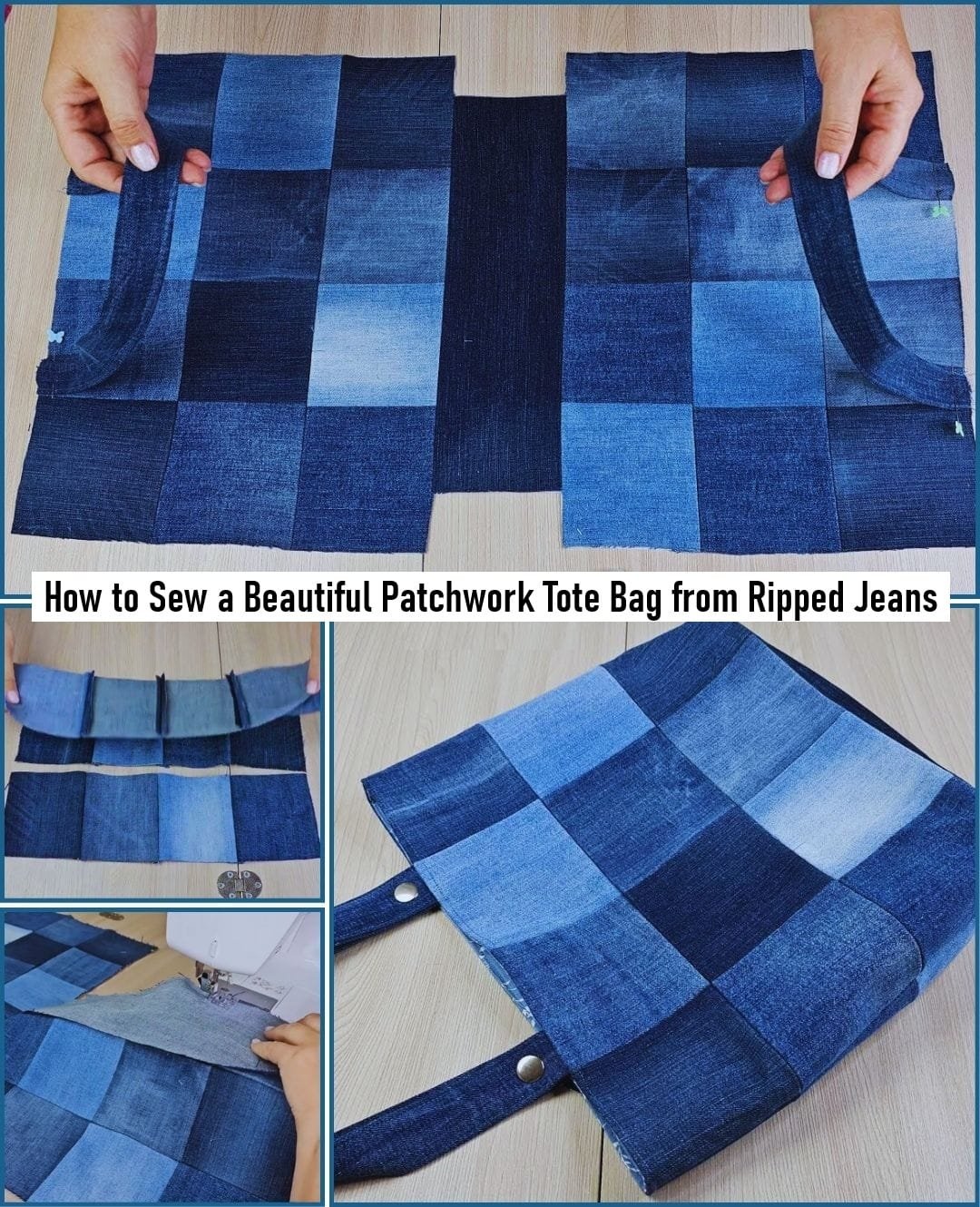
Start by laying out your patchwork design. Arrange your denim squares into a grid that forms a pleasing visual balance. Keep darker patches spread out evenly to avoid clumping.
Sew the squares together, row by row. Press the seams open after each row. Once the rows are complete, stitch them together to form the front and back panels of the bag.
After assembling the front and back, attach side panels if desired. Some free patterns include boxed corners for a more structured tote. Make sure all seams are aligned neatly for a polished finish.
Add the lining. Sew the lining pieces together in the same shape as your outer bag, but leave a small gap at the bottom to turn the bag right side out later.
Pin the straps in place between the outer fabric and the lining, making sure they are symmetrical. Sew around the top edge, then turn the bag inside out through the gap in the lining. Stitch the gap closed.
Topstitch around the opening of the bag for a clean edge and added durability. At this point, your Patchwork Tote Bag from Ripped Jeans should be fully assembled and ready to use!
Creative Variations and Tips
The beauty of this project is its flexibility. You can adapt it to suit your own style and needs.
Try adding a pocket made from a jeans back pocket. It’s a great way to reuse every part of the jeans and gives your tote added functionality.
Incorporate decorative stitching. Use colorful thread to topstitch or quilt over the patchwork panels for a touch of flair.
Experiment with shapes. Squares are traditional, but rectangles or even hexagons can add visual interest to your patchwork tote bag.
Use a color theme. Try a monochromatic look with different tones of one color, or mix in complementary fabrics like canvas or floral cotton.
Add embellishments like buttons, fabric paint, or embroidery. Personal touches make your creation even more special.
Finally, remember that imperfections add character. Don’t stress over perfect alignment or uniform stitches—your tote will be beautiful because it’s handmade with love.
FAQ: Patchwork Tote Bag from Ripped Jeans
Can I make this bag without a sewing machine?
Yes, but it will take longer. Hand-sewing is possible with heavy-duty thread and a strong needle, though you’ll need patience.
Do I need a specific pattern to follow?
Not necessarily. While a free pattern is helpful, you can create your own layout with simple patch shapes and basic sewing techniques.
What if my jeans are very worn or thin?
If parts are too thin, avoid using them or reinforce with interfacing. You want sturdy pieces for a durable bag.
Can I wash the finished tote bag?
Absolutely. Use cold water and air-dry to preserve the stitching and prevent fraying.
Is this suitable for beginners?
Yes! This is a fantastic beginner project. It teaches sewing, patchwork, and construction skills in a fun, forgiving format.
How do I make the bag more structured?
Add interfacing or batting between the layers for extra body. Boxed corners and double stitching also help with structure.
Conclusion
Creating a Patchwork Tote Bag from Ripped Jeans Free Pattern is more than just a fun DIY activity—it’s a creative journey into sustainable fashion, quilting tradition, and personal expression. This project transforms what would be discarded into something beautiful, durable, and uniquely yours.
You’ve learned how to choose materials, follow a patchwork layout, sew your bag step-by-step, and customize it to suit your personality. Whether you’re crafting for yourself or someone else, this tote is bound to turn heads and start conversations.
We’d love to hear your thoughts! If you tried this tutorial, please leave a sincere opinion in the comments and feel free to share suggestions or your own creative tips for making the perfect patchwork tote bag.