If you love transforming old materials into something beautiful and useful, this tutorial on how to sew a travel bag from old jeans will inspire your creativity.
Repurposing denim is not only eco-friendly but also perfect for creating a sturdy, stylish, and affordable bag ideal for weekend trips, gym days, or everyday use.
In this guide, you’ll learn step-by-step how to turn worn-out jeans into a practical travel bag with charm and personality.
Why Make a Travel Bag from Old Jeans
Old jeans are one of the best materials to reuse because denim is durable, flexible, and easy to work with. When transformed into a travel bag, denim provides structure while maintaining a casual and fashionable look. Plus, using old jeans helps reduce waste, making this project a mindful crafting choice. Whether your jeans are torn, faded, or simply out of style, the fabric still has plenty of life left and can become a long-lasting handmade bag.
Supplies You Will Need
To sew your travel bag easily and successfully, gather a set of basic sewing tools. You will need a pair of old jeans—preferably adult-sized for larger pieces—scissors, a sewing machine, matching or contrasting thread, pins, lining fabric, a zipper of 40–50 cm depending on your desired bag size, straps (either denim-made or cotton webbing), and optional embellishments such as patches, lace, or fabric paint. Using high-quality thread is recommended to strengthen the seams and ensure your bag holds weight well.
Preparing the Denim Pieces
Start by cutting your jeans apart along the inner and outer seams to open the fabric completely. Lay the pieces flat and examine which parts are best for the bag panels. The leg sections are excellent for large panels because they offer long, uninterrupted denim. The pockets and waistband can be reused as decorative features or extra compartments. Smooth out wrinkles with a warm iron so you can cut precise shapes for your pattern.
Creating the Bag Body Pattern
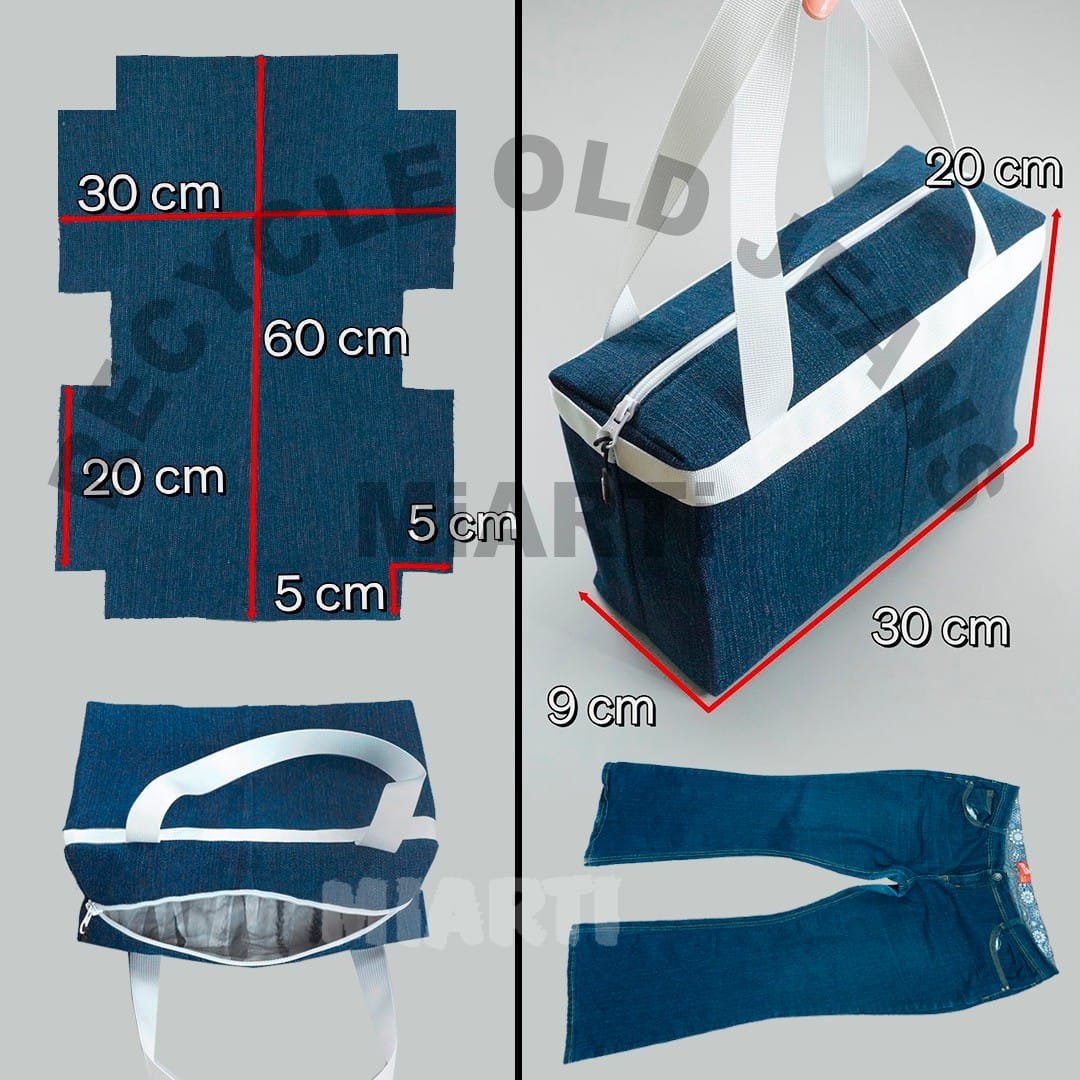
To make a travel bag, you will need two large rectangles for the front and back panels. A general size for a medium travel bag is 45×35 cm, but feel free to adjust the measurements according to how spacious you want the bag to be. Cut two fabric pieces of equal size for the main body. If your jeans have interesting seams or faded detailing, position your pattern to highlight them. Denim’s natural variations give your handmade bag a uniquely rustic charm.
Adding Pockets and Decorative Features
Before assembling the bag, decide where to place pockets or decorative elements. Using the original jean pockets is a great way to maintain the denim aesthetic while adding practical storage. Cut around the pockets, leaving a seam allowance, and sew them onto one or both panels. You may also include the waistband as a stylish trim or add appliqués to personalize the design. Denim embellishments stand out beautifully, so this step helps make your travel bag one of a kind.
Preparing the Lining Fabric
A well-made travel bag needs a lining to keep the interior clean and durable. Choose a cotton or canvas fabric that complements the denim. Cut two lining pieces matching the dimensions of your main panels. If you want interior pockets, this is the time to sew them onto the lining fabric. A zippered or elasticized inner pocket adds extra convenience for organizing small items like keys, chargers, or passports.
Sewing the Main Panels Together
Place the two denim panels right sides together and pin along the sides and bottom. Sew using a straight stitch with about 1 cm seam allowance. Reinforce the seams by going over them twice or using a zigzag stitch afterward to prevent fraying. Repeat this process with the lining pieces, but leave a small opening at the bottom to turn the bag inside out later. Keeping everything aligned will ensure a neat and professional finish.
Creating and Attaching the Bag Base
To give the bag depth, create boxed corners. Align the side seam with the bottom seam on each corner, forming a triangular shape. Measure 6 to 8 cm from the tip of the triangle, draw a line, and sew across it. Cut off the extra fabric, leaving a small allowance. Repeat the same step for the lining. This technique transforms the flat panels into a spacious, three-dimensional bag structure.
Making the Handles or Straps
For sturdy straps, you can either cut long strips from the jean legs or use cotton webbing. If using denim, cut two strips around 60–70 cm long and 8–10 cm wide. Fold each strip lengthwise, right sides together, sew along the edge, and turn them right side out. Topstitch along both sides for reinforcement. For cotton webbing, simply cut the desired length. Attach the straps to the top edges of the denim panel, spacing them evenly and ensuring they are symmetrical.
Inserting the Zipper
Place the zipper face down along the top edge of one denim panel and pin it in place. Lay one lining piece over the zipper, aligning all edges, and sew through all layers. Repeat this process with the other side of the zipper and the second panel. When opened, the zipper should sit neatly between the denim exterior and the lining. Ensure your stitches are straight and secure, as the zipper will be used frequently.
Assembling the Bag Completely
Once the zipper is attached, open it halfway and turn the denim and lining pieces right sides together again, matching seams carefully. Sew around the entire outer edge, leaving the small opening in the lining. Turn the bag right side out through the lining hole, then stitch the hole closed either by hand or using the machine. Push the lining into the bag and smooth it out for a clean finish.
Final Touches and Strengthening Seams
For extra durability, topstitch around the zipper area and reinforce the strap attachments with additional stitching. If you want, add decorative topstitching around the bag edges to create a polished look. Denim pairs well with visible stitches, giving your project a handcrafted, artisan feel. At this step you can also attach patches, labels, or charms to reflect your personal style.
Customizing Your Travel Bag
The beauty of sewing a travel bag from old jeans is the freedom to customize. You can vary the size, include more pockets, use contrasting fabrics, or even sew multiple bags with different styles. Patchwork denim looks especially stunning for a creative, eclectic effect. Combining light and dark washes gives depth and visual interest to the final piece.
Caring for Your Handmade Denim Bag
Since denim is sturdy but can fade over time, it’s best to wash your handmade bag gently. Spot-clean when possible and avoid excessive machine washing. Air-drying helps maintain the fabric’s structure. With proper care, your travel bag will last for years and develop a softer, vintage look that denim lovers adore.
Why This Project Is Great for Beginners and Experts Alike
This tutorial is simple enough for beginners, yet open-ended enough for experienced sewists to get creative. The clear lines of denim make cutting and sewing easier, while the structure of the bag allows you to practice useful techniques such as boxed corners and zipper installation. Whether you are learning or refining your sewing skills, this project is rewarding and functional.
Creative Variations to Try Next
Once you master this travel bag tutorial, you can experiment with different bag types—such as backpacks, tote bags, pouches, or weekend duffel bags—all using repurposed jeans. Denim is remarkably versatile, and each pair of jeans you recycle opens the door to new designs and ideas.
Conclusion
Sewing a travel bag from old jeans is an enjoyable and sustainable way to create something beautiful from materials you already have. With just a few basic tools and simple techniques, you can make a stylish, durable, and practical bag perfect for traveling, gifting, or everyday use. This easy tutorial offers endless possibilities for personalization, ensuring every bag becomes a unique handmade treasure.
VIDEO TUTORIAL
Enjoy the process, embrace the creativity of repurposing denim, and let your sewing skills shine through every stitch