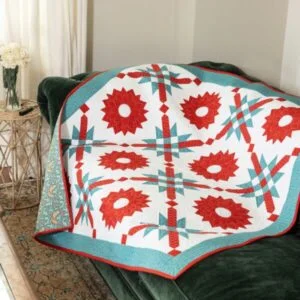
The Corn and Beans Quilt Block pattern is a timeless design that has captured the hearts of quilters for generations. Known for its striking geometric shapes and balanced contrast, this traditional block is a beautiful representation of heritage and creativity in quilting.
The Corn and Beans Quilt Block embodies a rustic charm that connects the art of quilting with the beauty of rural life. Inspired by farm fields and the rhythm of nature, this pattern symbolizes abundance, harmony, and balance.
Creating a Corn and Beans Quilt Block pattern is not only a journey through design but also a reflection of patience, precision, and artistic flair. It challenges quilters to master color contrast and perfect their piecing skills, making it an ideal project for those looking to improve their quilting techniques.
History and Origin of the Corn and Beans Quilt Block
The origins of the Corn and Beans Quilt Block trace back to the early 19th century when quilting became an essential part of daily life for settlers and farmers. Women used fabric scraps to create functional yet artistic pieces that told stories of their community and environment. The Corn and Beans pattern reflected agricultural life—a tribute to the crops that sustained families and symbolized prosperity.
During the mid-1800s, quilt blocks like Corn and Beans gained popularity due to their versatility and the ease with which they could be combined into larger quilts. The distinctive interplay between light and dark fabrics mirrored the appearance of cornfields, giving the pattern a natural, rhythmic feel. Many early quilters used earthy tones such as browns, greens, golds, and creams to echo the landscape of rural America.
Over time, this pattern became more than just a utilitarian design. It evolved into a form of artistic expression, blending creativity and storytelling. Each Corn and Beans Quilt Block told a tale of the quilter’s life, representing family values, seasonal cycles, and the interconnectedness between humans and nature.
In the early 20th century, quilting saw a revival, and traditional blocks like Corn and Beans were rediscovered by a new generation of quilters. They appreciated the timeless appeal and the opportunity to reinterpret the design using bright modern fabrics and contemporary layouts.
Today, the pattern continues to be celebrated as a classic piece of quilting history. Many modern quilters use digital tools to plan color combinations and fabric placement, ensuring precise alignment and symmetry while maintaining the vintage essence of the design.
The Corn and Beans Quilt Block remains a beloved favorite among quilting enthusiasts because it bridges the gap between the past and present, combining history with modern artistry in every stitch.
How to Create a Corn and Beans Quilt Block Pattern
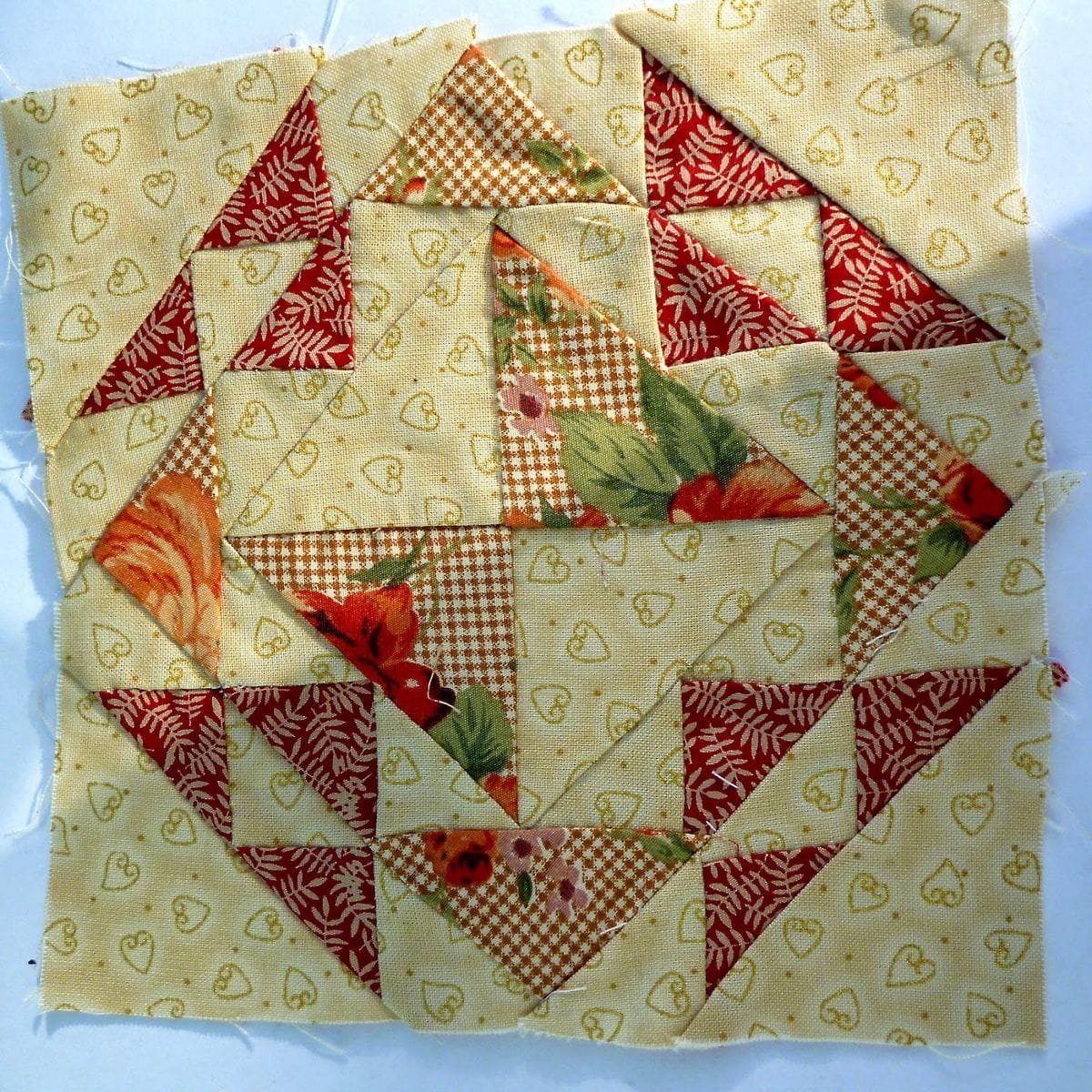
To make a Corn and Beans Quilt Block pattern, you’ll need a good understanding of half-square triangles (HSTs), careful cutting, and accurate piecing. The block’s beauty lies in its simplicity, but achieving perfect points and clean lines requires attention to detail.
Start by choosing your fabrics wisely. The traditional version of this pattern relies on strong contrast—typically using a light fabric to represent the “corn” and a dark one for the “beans.” Modern quilters often experiment with bold color palettes, substituting the earthy tones with bright contemporary hues to give the design a fresh, updated look.
Cut equal-sized squares for your half-square triangles and smaller pieces for the center sections. Accurate cutting is essential to ensure your seams align perfectly once assembled. Using a rotary cutter, ruler, and self-healing mat helps maintain precision and consistency throughout the process.
When sewing, chain-piecing can save time and keep your pieces organized. Stitch the triangles together, press seams carefully, and lay out all your pieces before joining the block. Always press seams in opposite directions to reduce bulk and create crisp intersections.
Assembling the Corn and Beans Quilt Block requires patience. Arrange your units so that the dark and light fabrics alternate correctly, forming the distinctive star-like pattern in the center. Double-check your layout before stitching the final seams together.
Finally, press the completed block flat and trim any uneven edges. You now have a beautifully pieced Corn and Beans Quilt Block pattern ready to be incorporated into your quilt project. Repeating this process will allow you to create a full quilt filled with rich texture and timeless appeal.
Design Variations and Color Ideas
One of the most exciting aspects of the Corn and Beans Quilt Block pattern is the wide range of design variations available. While the traditional pattern uses two contrasting colors, there’s no limit to the creativity you can apply when designing your quilt.
A monochrome approach—using varying shades of a single color—creates a subtle, elegant look. For example, using different tones of blue can give your quilt a calming, ocean-inspired feel. Conversely, choosing high-contrast colors such as black and white or red and cream makes the pattern bold and eye-catching.
For a modern twist, try incorporating patterned fabrics. Florals, plaids, or even batiks can add depth and personality to your quilt. The key is maintaining contrast between your “corn” and “beans” fabrics to preserve the integrity of the design.
If you’re creating a larger quilt, consider alternating blocks of Corn and Beans with other traditional patterns like Flying Geese or Bear’s Paw. This combination enhances visual interest and creates a rich tapestry of textures and forms.
Color placement can also dramatically change the appearance of your quilt. By rotating blocks or inverting color schemes, you can produce mesmerizing secondary patterns, giving the illusion of motion or depth.
Ultimately, your Corn and Beans Quilt Block pattern should reflect your personal style. Whether you prefer soft, vintage tones or vibrant, modern palettes, this versatile design adapts beautifully to any aesthetic.
Tips for Quilting and Finishing
After completing your Corn and Beans Quilt Block, the next step is quilting and finishing the project. This stage brings the quilt to life and ensures it remains durable and beautiful for years to come.
Choose a suitable batting that complements the intended use of your quilt. Lightweight cotton batting is ideal for wall hangings or summer quilts, while wool or polyester batting provides extra warmth for cozy bed quilts.
Before quilting, baste your layers carefully. Smooth out any wrinkles and secure the top, batting, and backing using pins or spray adhesive. This step prevents shifting during quilting, ensuring clean, professional results.
When it comes to quilting designs, consider emphasizing the geometric shapes of the Corn and Beans Quilt Block. Straight-line quilting enhances the crispness of the pattern, while free-motion quilting adds texture and artistic flair. You can even outline the block’s triangles and squares to create a 3D effect.
Binding is the final touch. Choose a binding fabric that complements your color scheme and attach it with precision. Hand-stitching the binding provides a clean finish, though machine stitching can save time and still look polished.
Once your quilt is finished, label it with your name and date. This small detail honors your craftsmanship and preserves the story of your work for future generations.
Caring for your Corn and Beans Quilt Block pattern quilt involves gentle washing and air drying. With proper maintenance, your handmade creation will remain vibrant and cherished for many years to come.
Frequently Asked Questions (FAQ)
1. What size is a traditional Corn and Beans Quilt Block?
Traditional blocks usually measure between 8 and 12 inches, but you can adjust the size to fit your project by scaling the pieces proportionally.
2. Is the Corn and Beans Quilt Block difficult for beginners?
It’s a moderately challenging pattern due to the number of half-square triangles, but with patience and careful pressing, even beginners can achieve great results.
3. What fabrics work best for this quilt block?
High-contrast fabrics work best—solids or small prints that clearly differentiate between the “corn” and “beans” sections.
4. Can I make a Corn and Beans Quilt Block using scraps?
Yes! This block is perfect for using up leftover fabric scraps, especially when experimenting with different color combinations.
5. How can I prevent my quilt block from warping?
Accurate cutting, consistent seam allowances, and careful pressing will help maintain perfect alignment and prevent distortion.
6. What quilting design complements the Corn and Beans pattern?
Simple straight-line quilting or outlining the block’s shapes works beautifully to enhance the pattern without overwhelming it.
Conclusion
The Corn and Beans Quilt Block pattern is a timeless piece of quilting history that continues to inspire crafters worldwide. With its deep roots in tradition and endless creative potential, this design bridges the gap between old-world charm and modern artistry. From learning its origins to mastering the techniques of piecing and color selection, this pattern offers both a rewarding challenge and a beautiful finished result.