Cathedral Window Quilt Pattern is one of the most elegant and visually striking quilting designs you can explore. The timeless beauty of the Cathedral Window Quilt Pattern lies in its unique folded fabric technique that creates stunning window-like shapes without traditional batting.
Unlike conventional quilting techniques that rely heavily on layered construction and extensive quilting stitches, the cathedral window quilt pattern uses fabric folding and strategic hand or machine stitching to create dimension and texture. This approach makes it both a creative challenge and a rewarding experience for quilters who want to try something different.
Whether you are a beginner eager to expand your skills or an experienced quilter searching for a statement piece, understanding how to create a cathedral window quilt can open the door to endless design possibilities. In this comprehensive guide, we will cover materials, construction techniques, customization ideas, and frequently asked questions to help you confidently start your own cathedral window quilt pattern project.
Understanding the Structure of a Cathedral Window Quilt Pattern
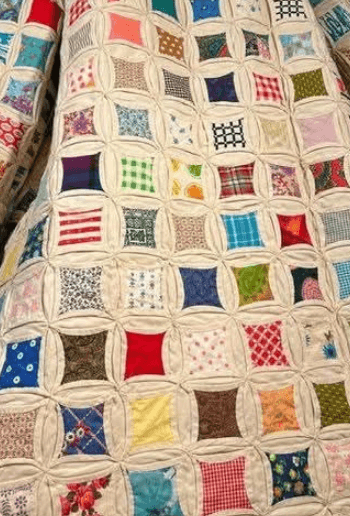
The beauty of the Cathedral Window Quilt Pattern comes from its distinctive folded blocks. Unlike traditional patchwork quilts, this design is constructed using squares that are folded into smaller units before being joined together. This folding technique creates the illusion of curved “windows.”
Each block typically starts with a larger fabric square. The edges are folded inward toward the center, creating clean lines and layered seams. These folded squares form the framework of the cathedral window quilt pattern and provide structural stability.
Inside each “window,” smaller fabric pieces are placed to add color and contrast. These inner fabrics are what give the quilt its stained-glass appearance. Choosing complementary colors enhances the dramatic effect of the cathedral window quilt design.
One unique feature of this pattern is that it often does not require batting. The layered folds naturally provide thickness and softness. This makes the cathedral window quilt pattern lighter than traditional quilts, while still maintaining warmth and durability.
Precision is crucial when folding and aligning blocks. Accurate measurements ensure that each “window” lines up evenly across the quilt surface. Consistency in folding directly impacts the professional appearance of your project.
Although this pattern may look complex, breaking it down into manageable steps makes it approachable. With patience and attention to detail, even intermediate quilters can master the cathedral window quilt pattern.
Materials and Preparation for Your Cathedral Window Quilt
Before beginning your Cathedral Window Quilt Pattern, gather essential materials. You will need high-quality cotton fabric, coordinating thread, sharp scissors or a rotary cutter, pins or clips, an iron, and a sewing machine (optional for certain steps).
Cotton fabric is ideal because it presses crisply and holds folded shapes well. Since folding is central to the cathedral window quilt pattern, fabric that maintains clean creases will make the process smoother and more precise.
Start by pre-washing and pressing your fabric. Removing excess sizing and shrinkage ensures long-lasting results in your cathedral window quilt. Pressing also prepares the fabric for accurate cutting.
Cut large squares for the base framework. These squares will be folded multiple times, so careful measurement is important. Uniform base squares help maintain alignment throughout your cathedral window quilt pattern.
Next, cut smaller squares or circles for the inner window sections. These fabrics will add contrast and personality. Bold prints and bright solids work beautifully inside the folded frames.
Keep your workspace organized. Label stacks of base squares and window inserts to avoid confusion during assembly. Proper preparation saves time and reduces mistakes in your quilting process.
Step-by-Step Construction of the Cathedral Window Quilt Pattern
Begin by folding each large square in half horizontally and vertically, pressing firmly to create clear crease lines. Then fold each corner toward the center, forming a smaller square. This foundational step defines the structure of your cathedral window quilt pattern.
Arrange folded squares side by side, aligning edges carefully. Sew the folded edges together to connect blocks. Take your time to ensure consistent seam allowances, as this affects the symmetry of the cathedral window quilt.
Once rows are joined, connect them to build the quilt top. Press seams gently to maintain crisp folds without flattening the dimensional effect of the windows.
Open the folded flaps slightly and insert the smaller contrasting fabric pieces into each window section. Carefully fold the edges over the insert and stitch along the curved edge. This stitching creates the distinctive arch shape of the cathedral window quilt pattern.
Repeat the process for each window. Although repetitive, this stage is highly satisfying as the stained-glass effect becomes visible across the quilt surface.
After completing all windows, inspect your quilt for loose threads or uneven folds. A final press enhances the finished appearance while preserving the dimensional texture.
Creative Variations and Design Ideas
The versatility of the Cathedral Window Quilt Pattern allows for endless customization. Experimenting with color gradients can create a soft ombré effect across the quilt surface.
You can also use themed fabrics for seasonal or holiday designs. Festive prints inside each window add personality to your cathedral window quilt.
Another creative idea is combining solid outer frames with bold patterned inserts. This contrast emphasizes the curved shapes and enhances the architectural beauty of the cathedral window quilt pattern.
For smaller projects, consider making pillows, table runners, or baby quilts using the same technique. The folding method adapts beautifully to various sizes.
Hand quilting details around each window can add extra texture. Decorative stitches highlight craftsmanship and give your cathedral window quilt a handcrafted charm.
If you prefer modern aesthetics, experiment with monochromatic color schemes. Using shades of a single color creates a sophisticated and minimalist interpretation of the traditional cathedral window quilt pattern.
FAQ About Cathedral Window Quilt Pattern
Is the Cathedral Window Quilt Pattern suitable for beginners?
It is best suited for intermediate quilters, but determined beginners can succeed with patience and careful measurement.
Does this quilt require batting?
Traditional versions do not require batting because the folded layers provide thickness and structure.
How long does it take to complete?
The time varies depending on size and complexity. A small project may take several days, while a full-size quilt may require several weeks.
What fabric works best?
High-quality cotton fabric is recommended for crisp folds and durability in your cathedral window quilt pattern.
Can I machine sew this quilt?
Yes, many steps can be done by machine, though some quilters prefer hand stitching for precision around window curves_attachment.
Is the Cathedral Window Quilt Pattern durable?
Yes, when constructed carefully with strong stitching, it becomes a durable and long-lasting quilt.
Conclusion
The Cathedral Window Quilt Pattern is a timeless quilting technique that blends structure, elegance, and creativity. In this guide, we explored the unique folded construction method, essential materials, step-by-step assembly, and inspiring design variations.
Creating a cathedral window quilt requires patience and attention to detail, but the result is a breathtaking piece that showcases craftsmanship and artistic expression. The dimensional windows and vibrant inserts make this pattern truly stand out among quilting designs.
VIDEO TUTORIAL
Have you tried making a cathedral window quilt pattern? We would love to hear your honest opinion, experiences, or creative suggestions. Share your thoughts and inspire fellow quilters to explore this beautiful and rewarding quilting technique.