How to Make a Love Rooster and Hen Carpet Pattern is a creative and heartwarming crochet project that combines decorative charm with practical home décor. Learning How to Make a Love Rooster and Hen Carpet Pattern allows you to craft a unique handmade rug that symbolizes warmth, partnership, and rustic farmhouse style.
This type of crochet carpet is perfect for kitchens, entryways, or cozy country-inspired interiors. With careful planning, durable materials, and precise shaping techniques, you can create a long-lasting rug that is both visually appealing and functional.
When exploring How to Make a Love Rooster and Hen Carpet Pattern, it is important to understand that this project requires structure, symmetry, and reinforced finishing. Because the carpet will rest on the floor, durability and stability are essential.
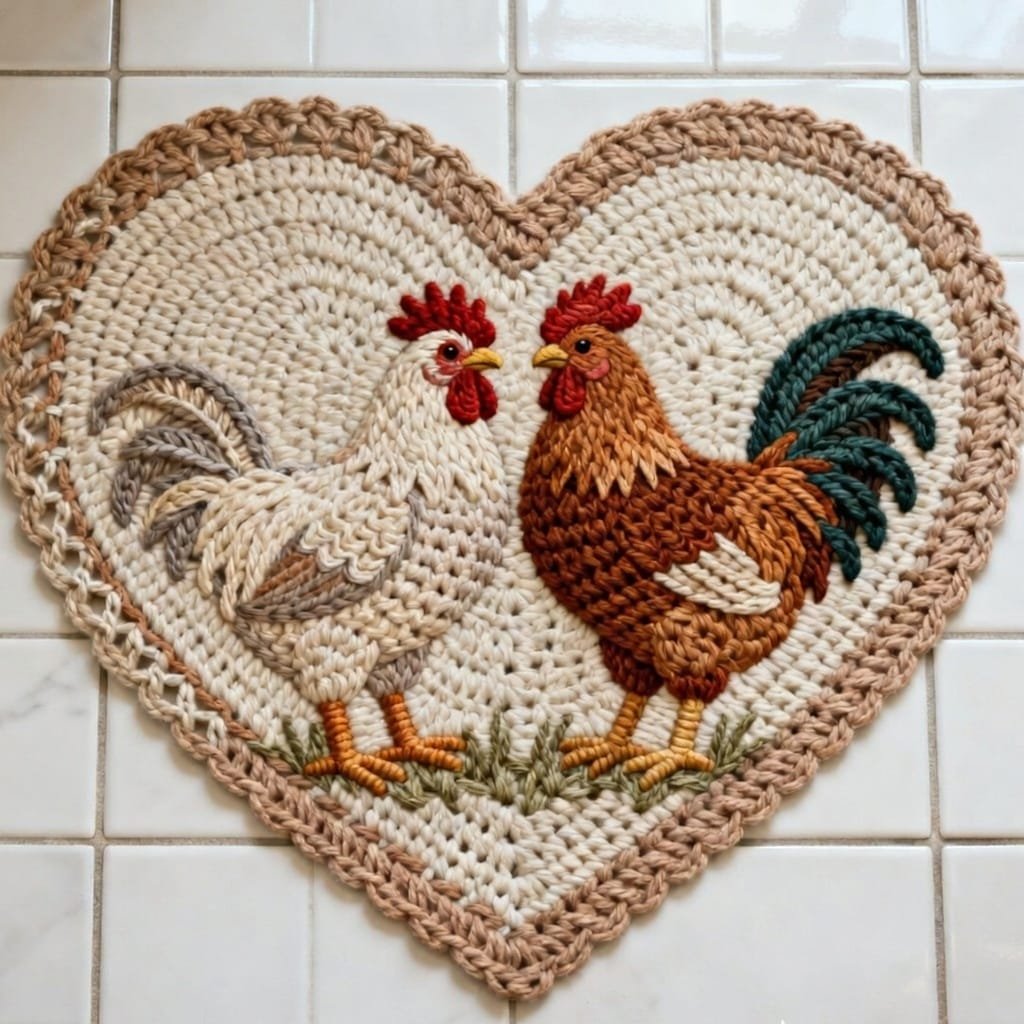
The rooster and hen shapes must be well-balanced, and the overall design should remain flat without curling. Throughout this tutorial, you will learn about material selection, pattern drafting, shaping techniques, assembly, decorative detailing, and finishing methods to ensure a professional-quality result.
Another key element in mastering the Love Rooster and Hen Carpet Pattern is thoughtful design layout. You can position the rooster and hen side by side, facing each other to create a “love” theme, or integrate subtle heart shapes between them. Color coordination plays a significant role in highlighting each figure while maintaining harmony within the overall rug design. By combining careful stitch work with creative expression, you can transform simple yarn into a meaningful and charming crochet carpet.
Choosing Yarn and Tools for a Durable Carpet
Selecting the right materials is the foundation of How to Make a Love Rooster and Hen Carpet Pattern successfully. Since this is a carpet rather than a decorative plush item, thicker and more durable yarns are recommended. Cotton yarn, cotton-blend rope yarn, or recycled t-shirt yarn work especially well because they provide structure and are easy to clean. Super bulky yarn (category 6) is ideal for maintaining shape and strength.
Use a large crochet hook appropriate for your yarn choice, typically between 8mm and 12mm. A larger hook ensures a flexible yet dense fabric. Additional tools include stitch markers, scissors, measuring tape, tapestry needle, and embroidery thread for facial details. If desired, anti-slip backing fabric can be sewn to the underside to increase floor safety.
Before beginning, crochet a small gauge swatch. This step helps you calculate stitch density and adjust hook size if necessary. A consistent gauge ensures that the rooster and hen proportions remain accurate throughout the project.
Planning size is also crucial. Decide whether your carpet will measure approximately 60 cm, 80 cm, or larger. Sketching the shapes on paper beforehand helps visualize proportions and balance.
Constructing the Base and Main Shapes
The first step in How to Make a Love Rooster and Hen Carpet Pattern is creating the base structure. Many designs begin with an oval or large circular foundation that supports both bird figures. Start with a foundation chain and work in continuous rounds, increasing evenly at curved sections to maintain a flat surface.
To create the rooster and hen shapes, you may crochet them directly onto the base using color changes, or construct them separately and sew them onto the finished rug. Direct colorwork creates a seamless appearance, while separate appliqué-style construction adds subtle dimension.
For the rooster, emphasize a prominent comb and tail feathers. Use gradual increases and decreases to shape the body. The hen typically has a rounder, softer silhouette. Maintaining symmetry between the two figures is important for visual balance.
Use tight single crochet stitches for durability. Double crochet stitches may be incorporated for decorative tail feathers, but ensure the overall fabric remains firm enough for floor use.
Adding Decorative Details and Love Elements
The charm of the Love Rooster and Hen Carpet Pattern lies in its details. Embroider facial features using flat stitches rather than plastic safety eyes, as rugs require smooth surfaces. Use satin stitch for beaks and simple oval stitches for eyes.
To emphasize the “love” theme, consider crocheting a small heart between the rooster and hen. This heart can be attached securely or incorporated into the base using colorwork techniques. Choose contrasting but harmonious colors to highlight this central element.
Feathers can be stylized using layered stitches or subtle texture techniques such as front-post crochet. However, avoid overly raised details that may wear down quickly. The goal is decorative elegance combined with practicality.
Carefully weave in all yarn ends and reinforce attachment points. High-traffic items require strong finishing to maintain longevity.
Finishing and Reinforcement Techniques
Once all design elements are complete, inspect the entire How to Make a Love Rooster and Hen Carpet Pattern for uneven tension or curling edges. If edges begin to curl, add a final round of evenly spaced increases to flatten the rug.
Consider adding a border to frame the design. A simple round of single crochet or reverse single crochet (crab stitch) creates a polished edge and strengthens the perimeter.
For added safety, sew anti-slip fabric to the underside of the carpet. This is especially important if the rug will be placed on tile or hardwood floors.
Finally, block the finished carpet lightly using steam (if yarn type allows) to help it lay flat. Allow it to dry completely before placing it in your home.
FAQ
Is the Love Rooster and Hen Carpet Pattern suitable for beginners?
Intermediate beginners can complete this project if they are comfortable with basic stitches and simple shaping techniques.
What yarn works best for a crochet carpet?
Cotton, cotton-blend, or t-shirt yarn provides durability and structure for floor use.
Can I wash the finished carpet?
Yes, most cotton yarn rugs can be gently hand washed and air dried. Always check yarn care instructions.
How do I prevent the rug from slipping?
Attach anti-slip backing fabric or use a non-slip rug pad underneath.
Can I customize the design?
Absolutely. You can adjust colors, add hearts, or modify feather details to personalize your carpet.
Conclusion
Learning How to Make a Love Rooster and Hen Carpet Pattern combines creativity, structure, and functional craftsmanship. By selecting durable materials, shaping carefully, and reinforcing finishing details, you can create a charming handmade rug that adds warmth and personality to any room. This project not only enhances your crochet skills but also results in a meaningful decorative piece. If you found this guide helpful, please share your honest opinion and suggestions. Your feedback supports continued creative learning and inspires future crochet designs.
As you continue practicing How to Make a Love Rooster and Hen Carpet Pattern, you will notice how your shaping skills and color transitions become more refined with each project. Taking time to adjust stitch tension and maintain consistent spacing ensures that both figures remain symmetrical and well-defined. This attention to detail transforms a simple crochet rug into a visually balanced decorative statement. With patience and steady technique, your finished carpet will reflect both craftsmanship and creativity in every stitch.
Another advantage of mastering the Love Rooster and Hen Carpet Pattern is the ability to adapt the design for different spaces and themes. You can enlarge the pattern for a bold farmhouse centerpiece or create a smaller version for a cozy kitchen accent.
Experimenting with neutral tones, vibrant reds, or soft pastel shades allows you to match seasonal décor effortlessly. By refining your approach and exploring variations, you build confidence while creating meaningful handmade pieces that bring warmth and personality into your home.