A Fabric Pyramid Cat House Pattern is a creative sewing project that gives cats a cozy, private place to rest, hide, and relax. Its pyramid-shaped structure creates a small shelter with a comfortable interior, making it a practical addition to a pet-friendly home.
Unlike ordinary flat pet beds, this design uses angled fabric panels to create an enclosed space. You can customize the dimensions, choose attractive fabrics, and add a soft cushion to make the finished cat house both functional and decorative.
Whether you are an experienced sewer or trying a new DIY project, making a fabric cat house is a great opportunity to practice measuring, cutting, joining panels, and adding structure. With suitable materials and careful construction, you can create a comfortable little retreat for your feline companion.
Choosing the Best Fabrics and Sewing Supplies
Choosing durable and comfortable materials is essential when making a Fabric Pyramid Cat House. The exterior should be sturdy enough to maintain its shape, while the interior should feel soft and inviting.
Cotton canvas and medium-weight upholstery fabric are excellent options for the outer panels. They are generally more resistant to everyday wear than lightweight quilting cotton and provide a stable surface for the pyramid structure.
For the interior, consider cotton flannel, fleece, or soft microfiber. These fabrics create a comfortable resting surface and can make the shelter feel warmer during colder months.
You will need the following supplies:
- Approximately 1 to 2 yards of exterior fabric, depending on the dimensions.
- Soft lining fabric.
- Foam padding or washable batting.
- A removable cushion or pillow insert.
- Strong polyester sewing thread.
- Sewing machine and suitable needles.
- Fabric scissors or rotary cutter.
- Measuring tape and ruler.
- Paper for creating the pattern.
- Sewing clips or pins.
- Optional zipper for a removable cushion cover.
For additional structure, you can use washable foam panels or a suitable flexible stabilizing material between the outer fabric and lining. Choose materials that do not create sharp edges or exposed components that your cat could chew.
Before cutting the fabric, wash it if the manufacturer’s instructions allow. This helps prevent shrinkage and makes future cleaning more predictable.
Creating the Pyramid Cat House Pattern
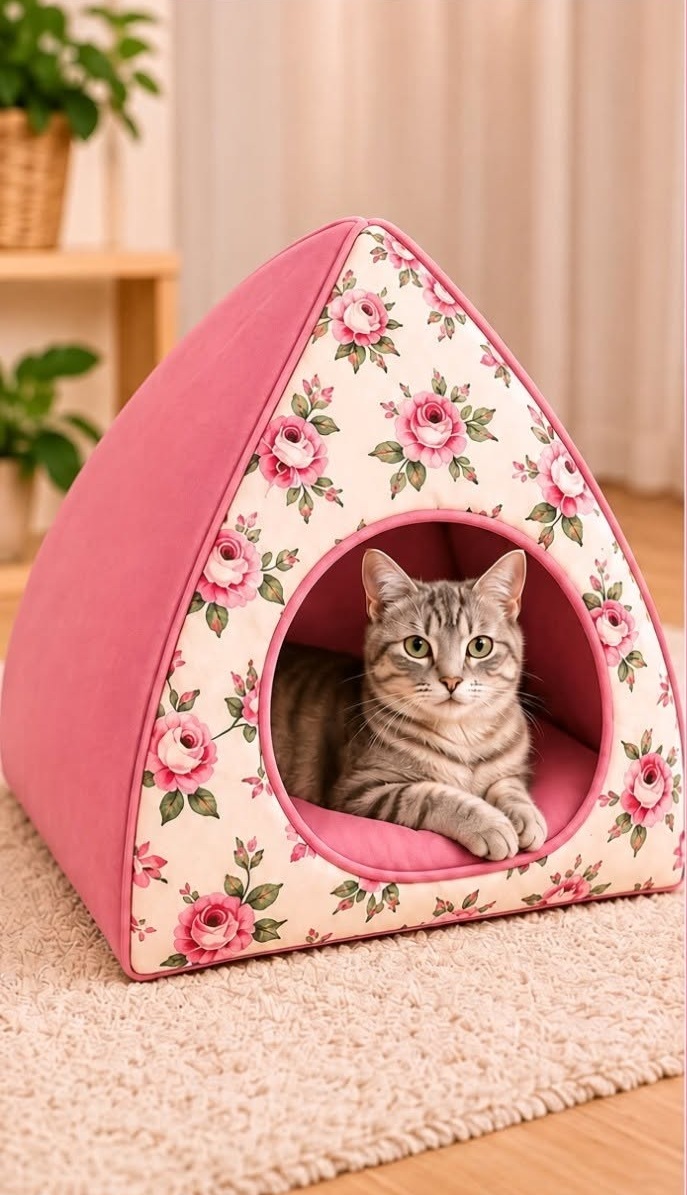
The shape is the most important part of a Fabric Pyramid Cat House Pattern. The design generally consists of triangular panels joined together to create a pyramid with an entrance on one side.
A simple starting design can use four triangular panels with a square or rectangular base. The exact dimensions should depend on your cat’s size and preferred resting position.
For an average adult cat, you might begin with a base measuring approximately 16 inches on each side and triangular panels around 18 inches tall. These measurements are only a starting point and should be adjusted to provide enough room for your pet.
Draw the triangular panels on pattern paper, making sure their bottom edges match the dimensions of the base. Add approximately ½ inch of seam allowance around the edges.
One of the panels will become the entrance. Draw a rounded doorway near its lower center, leaving enough fabric around the opening to maintain stability.
The entrance should be large enough for your cat to enter and leave comfortably. Avoid making it too narrow or placing it so close to the seams that the fabric becomes weak.
Once the pattern is ready, cut the exterior fabric, lining, and padding according to the required pieces. Label each panel to avoid confusion during assembly.
For a more structured design, consider adding a removable support layer inside each triangular panel. This can help the pyramid maintain its shape without making the shelter unnecessarily rigid.
Sewing and Assembling the Fabric Cat House
Begin by preparing the entrance panel. Place the exterior fabric and lining together, sew around the marked doorway, and carefully cut out the center while leaving enough seam allowance.
Turn the fabric through the opening and shape the edges. A neat topstitch around the doorway will help keep the layers in place and create a clean finish.
Next, assemble the triangular panels. Place two panels together with their right sides facing inward and sew along one side edge. Continue attaching the remaining panels until the pyramid structure begins to form.
If you are using foam or batting, secure the padding between the exterior and lining layers before closing the seams. Keep the padding evenly distributed to prevent lumps or weak areas.
After joining the panels, attach the pyramid to the square base. Align the bottom edges carefully and sew around the perimeter, reinforcing the corners where several seams meet.
A zipper or another secure closure can be added to a separate cushion cover. This makes it easier to remove and wash the sleeping surface without taking apart the entire cat house.
Before turning the structure into its final shape, inspect every seam and reinforce areas that may experience extra pressure. The entrance, base corners, and panel connections deserve particular attention.
Turn the house right side out and arrange the panels into a pyramid. Add the removable cushion inside and check that the shelter stands securely on a flat surface.
Customizing, Cleaning, and Making the Cat House Comfortable
One of the best parts of a Fabric Pyramid Cat House Pattern is the opportunity to customize the design. You can choose colors and prints that complement your home while creating a comfortable environment for your cat.
Neutral colors such as beige, gray, and cream create a simple appearance. Floral prints, paw patterns, and geometric fabrics can make the shelter more playful.
You can also personalize the project with:
- A contrasting fabric entrance.
- A removable fleece cushion.
- Decorative fabric panels.
- A matching pillow.
- A washable interior lining.
- A small fabric label with your pet’s name.
Keep decorations simple and securely attached. Avoid loose buttons, beads, cords, ribbons, or other small pieces that could become choking hazards or tempt your cat to chew.
Comfort and safety should always come before appearance. The pyramid must have enough interior space for your cat to turn around, lie down, and leave without difficulty.
Place the finished house on a flat, stable surface away from heavy foot traffic. Check that the entrance does not collapse and that the structure cannot easily tip over during normal use.
For cleaning, remove the cushion and wash removable components according to their fabric care instructions. Vacuum loose fur regularly and inspect the seams for damage.
If your cat scratches or chews the fabric, check the shelter frequently for exposed padding or loose threads. Repair damaged areas before allowing continued use.
Frequently Asked Questions
Is a Fabric Pyramid Cat House suitable for beginners?
Yes. Beginners can complete a basic version using triangular panels, a square base, and a simple removable cushion. Accurate cutting and careful seam alignment are the most important steps.
What fabric is best for a cat house?
Cotton canvas and upholstery fabric are good exterior choices because they provide durability. Fleece, flannel, and microfiber are comfortable options for the interior.
How much fabric do I need?
Approximately 1 to 2 yards may be enough for a small or medium cat house. The exact amount depends on the dimensions, lining, padding, and cushion design.
Can I make the cat house washable?
Yes. A removable cushion and washable lining make maintenance easier. Choose fabrics and padding that can be cleaned according to their care instructions.
How can I make the pyramid hold its shape?
Use sturdy exterior fabric and suitable flexible padding or washable foam panels. Reinforced seams and a stable base also help maintain the structure.
What size should the entrance be?
The entrance should comfortably accommodate your cat’s body without requiring it to squeeze through. Measure your pet and adjust the opening accordingly.
Conclusion
A Fabric Pyramid Cat House Pattern is a rewarding DIY project that combines practical sewing techniques with a comfortable space for your feline companion. By selecting durable fabrics, creating balanced triangular panels, and adding a soft removable cushion, you can build a cozy shelter suited to your cat’s needs.
Experiment with different colors, textures, and dimensions to create a unique design. With regular cleaning and careful inspection, your handmade cat house can become a favorite resting spot in your home.