A Fabric Raglan Sweater Pattern is a versatile sewing project that combines everyday comfort with a sporty, relaxed appearance. Its distinctive raglan sleeves extend from the neckline toward the underarm, creating diagonal seams instead of the traditional shoulder seam found in many sweaters.
This design is popular for casual clothing because it allows comfortable movement and offers plenty of opportunities for creative fabric combinations. You can use matching fabrics for a classic look or choose contrasting sleeves to create a more distinctive handmade garment.
Whether you are sewing your first sweater or expanding your handmade wardrobe, a raglan design is an excellent project for practicing garment construction. With suitable fabric, accurate measurements, and careful finishing, you can create a comfortable sweater for different seasons.
Choosing the Best Fabrics and Sewing Supplies
The fabric you select will determine how comfortable, warm, and durable your Fabric Raglan Sweater becomes. Since this garment is designed for movement, fabrics with some stretch are generally the most suitable.
French terry is a popular option because it has a soft interior and a smooth exterior. It provides moderate warmth without feeling as heavy as traditional sweatshirt fleece.
Cotton jersey is another good choice, especially for lightweight sweaters. It is breathable, flexible, and comfortable for everyday wear, although it may require more attention when sewing because it can stretch or curl along the edges.
For colder weather, consider sweatshirt fleece or a cotton-polyester knit blend. These fabrics provide additional insulation and can create a cozy garment for autumn and winter.
Useful supplies include:
- Main fabric for the sweater body.
- Contrasting fabric for the raglan sleeves, if desired.
- Rib knit for the cuffs, neckline, and waistband.
- Matching polyester sewing thread.
- Stretch or ballpoint sewing machine needle.
- Fabric scissors or rotary cutter.
- Measuring tape and sewing ruler.
- Pattern paper.
- Sewing clips or pins.
- Stretch-compatible sewing machine or serger.
A sewing machine with a stretch stitch or narrow zigzag stitch can help seams retain their flexibility. Before working on the garment, test your settings on a fabric scrap to make sure the stitches do not break when stretched.
Taking Measurements and Preparing the Raglan Pattern
Accurate measurements are essential for creating a comfortable Fabric Raglan Sweater Pattern. Unlike a fitted blouse, a sweater usually includes some additional room through the chest and body.
Start by measuring the chest, waist, hips, body length, sleeve length, and desired neckline width. If you are adapting an existing pattern, compare these measurements with the finished garment dimensions rather than relying only on the body measurements.
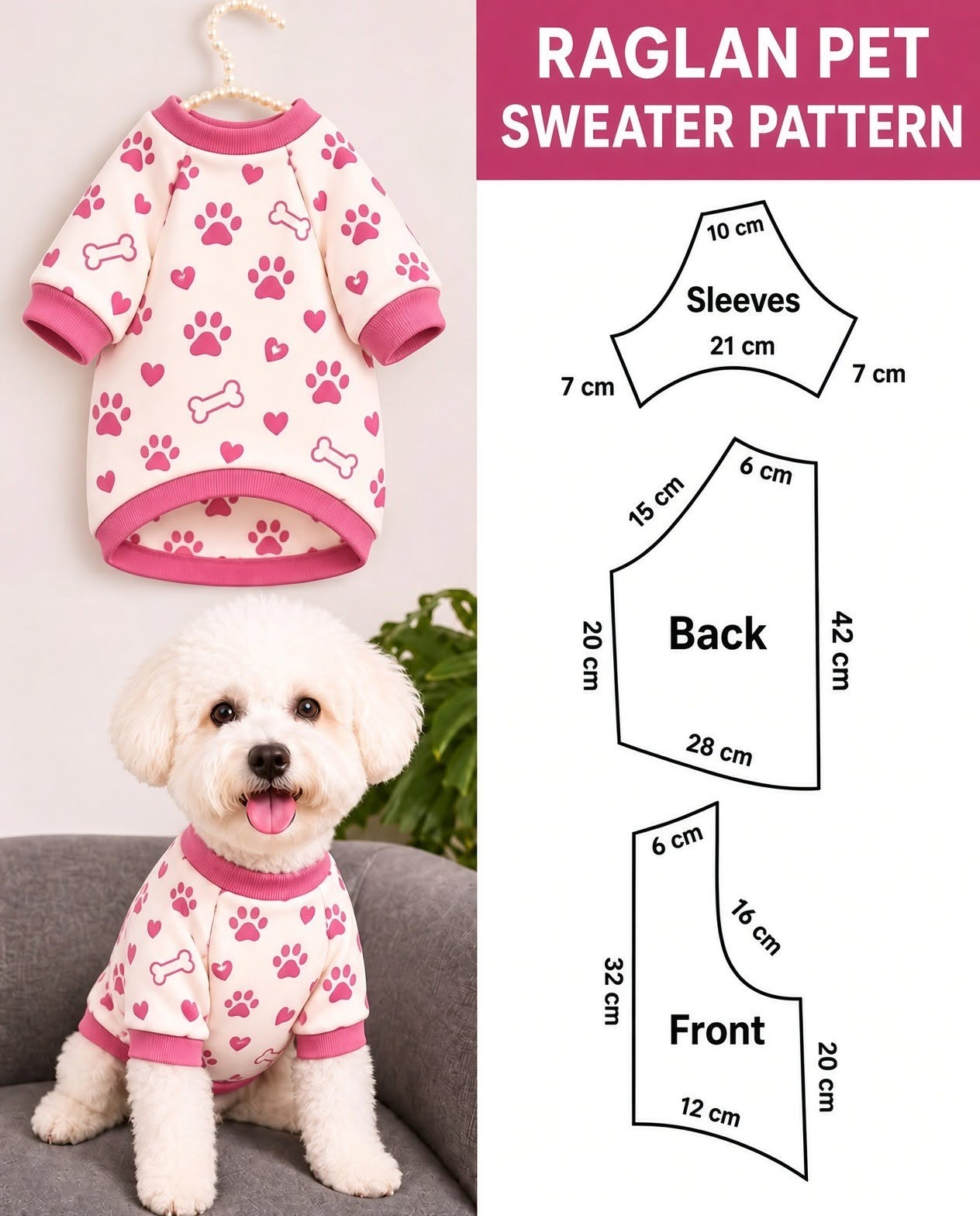
The raglan construction is characterized by four diagonal seams that connect the neckline area to the underarm. These seams separate the front, back, and two sleeves.
A basic pattern usually includes:
- One front body piece.
- One back body piece.
- Two sleeve pieces.
- A neckline band.
- Two sleeve cuffs.
- A bottom waistband.
Some patterns combine the front and back into larger pieces, but the construction principles remain similar.
When preparing the pattern, check the seam allowances and stretch direction. Knit fabrics should generally stretch around the body rather than vertically, helping the sweater fit comfortably.
For beginners, using an established raglan sewing pattern in the correct size can simplify the process. You can then customize the sleeve length, body length, neckline, and color combinations.
Before cutting the final fabric, make sure all pattern pieces are aligned correctly. Pay attention to the sleeve markings and diagonal seam lines because incorrect placement can affect the entire garment.
Sewing the Body, Sleeves, and Raglan Seams
The construction process begins with attaching the sleeves to the front and back body pieces. Place the fabric right sides together and align the raglan edges according to the pattern markings.
Pin or clip the pieces carefully, especially around the neckline and underarm areas. Sew the seams using a stretch stitch or serger, maintaining a consistent seam allowance.
Once the front and back are connected to both sleeves, the sweater will begin to resemble its final shape. Press the seams gently according to the fabric manufacturer’s recommendations.
Next, fold the garment with the right sides together and align the sleeve and side seams. Sew continuously from the sleeve opening toward the underarm and down to the bottom edge on each side.
Take your time at the underarm junction because several seams meet in this area. Avoid pulling the fabric while sewing, as stretching it can create uneven seams or unwanted puckering.
After completing the main construction, try the sweater on or compare it with the intended measurements. Check the chest, shoulder area, sleeve width, and overall length before attaching the finishing bands.
The neckline band should be slightly shorter than the opening so it sits smoothly without becoming loose. Distribute the fabric evenly as you sew it around the neckline.
Attach the sleeve cuffs and waistband in the same way. Rib knit is especially useful for these sections because it stretches comfortably and helps the garment maintain its shape.
Customizing, Finishing, and Caring for Your Raglan Sweater
One of the biggest advantages of a Fabric Raglan Sweater Pattern is the ability to customize its appearance. The diagonal sleeve seams create natural opportunities to combine different fabrics and colors.
For a sporty design, use a neutral body with contrasting sleeves. Navy and gray, black and cream, or burgundy and charcoal are classic combinations.
If you prefer a softer appearance, try pastel shades or subtle printed fabrics. Stripes, floral prints, and geometric patterns can also add personality without changing the basic construction.
You can further customize the sweater with:
- Longer or shorter sleeves.
- A slightly oversized body.
- A crew neckline or wider neckline.
- Decorative topstitching along the raglan seams.
- A kangaroo pocket on the front.
- Contrasting ribbed cuffs and waistband.
- Small embroidered details.
Before considering the project complete, inspect the seams for skipped stitches, loose threads, and areas that may need reinforcement. Stretch the cuffs and neckline gently to check that the stitching remains secure.
Wash the finished sweater according to the fabric care instructions. Turn it inside out when possible, use a suitable detergent, and avoid excessive heat that could shrink or damage the knit fibers.
For fabrics that tend to stretch, drying the sweater flat can help preserve its original shape. Store it folded rather than hanging it for long periods, especially if it is made from a heavier knit.
Frequently Asked Questions
Is a raglan sweater suitable for beginner sewers?
Yes. A raglan sweater is a good beginner-to-intermediate project because its construction uses relatively straightforward pieces. Working with stretch fabrics may require some practice.
What is the best fabric for a raglan sweater?
French terry, cotton jersey, sweatshirt fleece, and cotton-polyester knit blends are popular choices. The best option depends on the desired warmth, stretch, and overall fit.
Can I use two different fabrics for the sleeves and body?
Absolutely. Contrasting sleeves are one of the most recognizable features of raglan sweaters. Just make sure both fabrics have compatible stretch and weight.
Do I need a serger to sew this sweater?
No. A regular sewing machine can work well with a stretch stitch or narrow zigzag stitch. A serger is helpful for finishing seams but is not essential.
How do I prevent the neckline from stretching?
Use a suitable rib knit band, distribute the fabric evenly, and avoid pulling the neckline while sewing. Testing the band length on a fabric sample can also help.
Can I make a raglan sweater without rib knit?
Yes. You can use the main fabric for the cuffs, neckline, and waistband, provided it has enough stretch and recovery. Rib knit generally creates a more traditional sweatshirt finish.
Conclusion
A Fabric Raglan Sweater Pattern is a rewarding sewing project that combines comfort, versatility, and creative possibilities. By choosing the right knit fabric, preparing accurate pattern pieces, and carefully sewing the diagonal sleeve seams, you can create a garment that fits your style.
Experiment with contrasting sleeves, different neckline finishes, and customized lengths to make each sweater unique. With practice, this pattern can become a reliable foundation for creating comfortable handmade clothing throughout the year.