This project can be adapted for small, medium, and large dogs. You can create a simple vest with basic stitches or add decorative borders, stripes, and personalized touches. It is also a great opportunity to use leftover yarn from other crochet projects.
The most important consideration is your dog’s comfort. A well-made vest should fit gently around the body, allow natural movement, and never restrict breathing or walking.
Choosing the Best Yarn and Crochet Tools
Selecting the right yarn is essential for creating a comfortable dog vest. Soft cotton yarn is a good option for lightweight designs because it is breathable, washable, and provides excellent stitch definition. It is particularly useful for dogs that need a light layer without excessive warmth.
For cooler weather, a soft acrylic yarn or a suitable wool blend can provide more insulation. Choose a yarn that feels gentle against the skin and is easy to maintain. Avoid rough fibers that may cause irritation or yarns that shed excessively, especially if your dog tends to chew or lick its clothing.
A crochet hook that matches the yarn weight is another important tool. For a firmer fabric, you may use a slightly smaller hook than recommended on the yarn label, but avoid making the stitches so tight that the vest becomes stiff. A flexible measuring tape, stitch markers, scissors, and a yarn needle will help throughout the project.
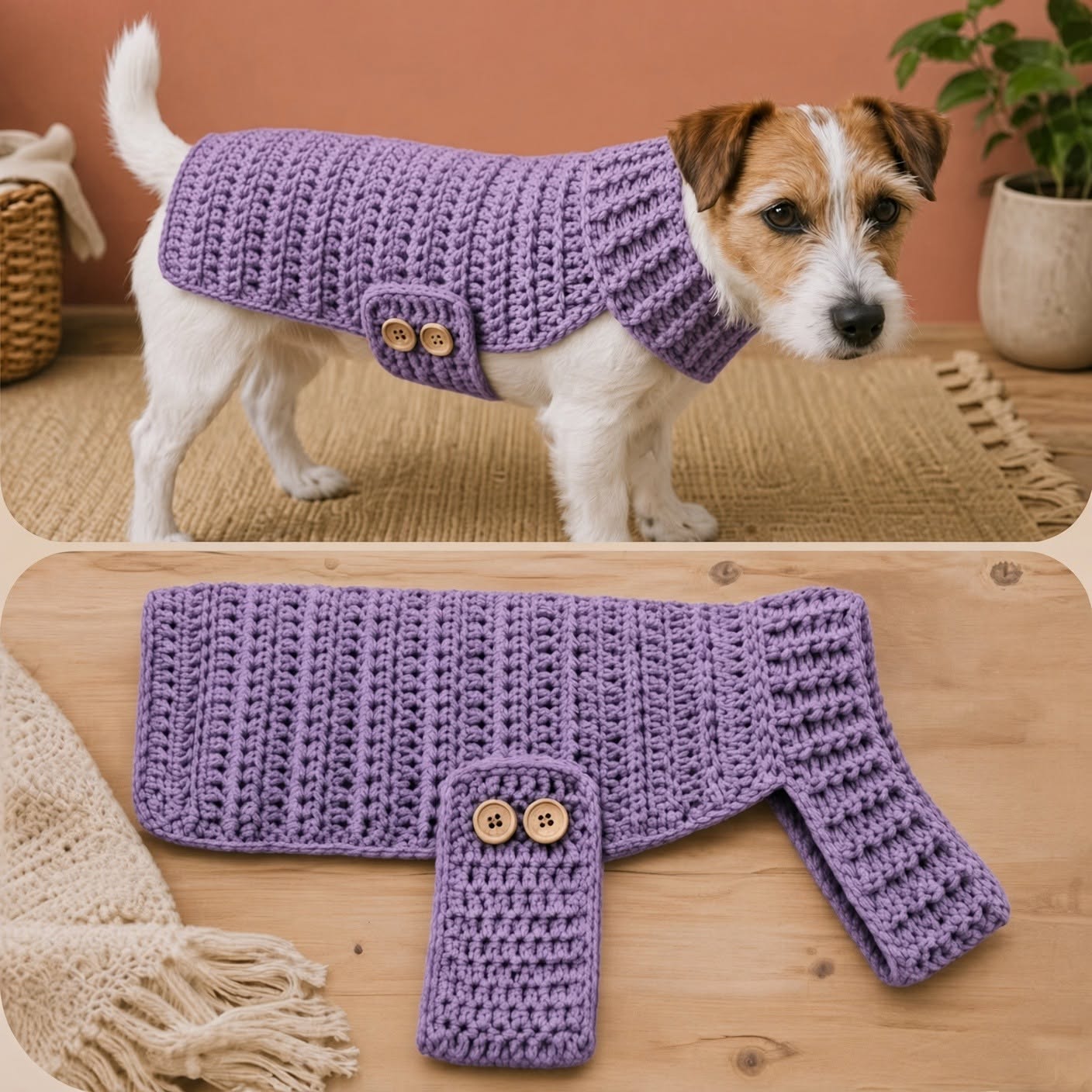
You may also want buttons, snaps, or other closures, but these should be used cautiously. Small detachable pieces can become choking hazards if chewed or swallowed. A simple design with secure ties or an appropriately positioned fastening system is often more practical.
Measuring Your Dog and Creating the Vest Shape
Accurate measurements help ensure that the finished vest fits properly. Measure your dog’s neck circumference, chest circumference at its widest point, and back length from the base of the neck to the desired ending point.
The chest measurement is particularly important because the vest needs enough room to fit comfortably around the rib cage. Add a little ease so your dog can breathe, walk, sit, and lie down naturally. Avoid making the neckline too tight or extending the fabric so far that it interferes with the legs.
A simple crochet dog vest can be constructed with a back panel and a belly section. The back panel covers the upper body, while the lower section wraps gently around the chest. Depending on your chosen design, you can crochet these sections separately and join them or work the vest in one continuous piece.
For a beginner-friendly construction, start with a foundation chain based on your dog’s measurements. Work rows of single crochet or half double crochet to create a rectangular panel, adjusting the width and length as needed. Shape the neckline and leg openings gradually, using decreases or skipped stitches where appropriate.
Before completing the vest, compare the crocheted piece with your measurements. You can also make a small sample using the chosen yarn and hook to check the fabric’s stretch and density. Remember that different stitches and yarns can produce very different results.
Crocheting, Shaping, and Finishing the Dog Vest
Once the basic measurements and construction are established, begin crocheting the main body. Single crochet creates a dense and sturdy fabric, while half double crochet offers a little more flexibility and can help the project progress faster. Both are useful options for a simple dog vest.
Work evenly and count your stitches regularly to maintain the correct dimensions. If the pattern includes openings for the front legs, make sure they are large enough for comfortable movement. Reinforce the edges with a round of single crochet to create a cleaner finish and help prevent stretching.
If you are making separate back and belly panels, join them carefully using slip stitches or a yarn needle. Keep the seams smooth and position them away from areas where they might rub against your dog’s skin. A soft border around the neckline and leg openings can make the garment more comfortable.
You can personalize the vest with stripes, color changes, textured stitches, or a simple crocheted border. Small decorative details can make the design unique, but avoid loose appliqués, beads, bells, and other pieces that your dog could pull off or swallow.
After weaving in all yarn ends, inspect the entire garment. Check for loose loops, uneven seams, and areas that could catch on furniture or outdoor objects. A finished vest should be flexible, secure, and easy to remove.
Comfort, Safety, and Care for Everyday Use
A crochet vest should never compromise your dog’s comfort. Try it on gradually and supervise your pet during the first few uses. Observe whether your dog walks normally, moves its front legs freely, and can sit or lie down without difficulty.
Check the fit around the neck, chest, belly, and leg openings. The fabric should not press tightly against the throat or restrict the shoulders. If your dog scratches repeatedly, tries to remove the garment, moves unusually, or develops skin irritation, take the vest off and adjust the design.
Consider the weather before choosing when to use the vest. Cotton is suitable for many lightweight designs, while warmer fibers may be appropriate for cooler conditions. Dogs with thick coats may not need additional insulation, and any dog can overheat if dressed inappropriately. Avoid using the vest during hot weather or intense exercise.
Wash the garment according to the yarn manufacturer’s care instructions. Use a gentle detergent, rinse thoroughly, and let it dry completely before use. Check the stitching and edges after washing, as crochet fabric can stretch or become misshapen over time.
Never leave a dog unattended while wearing clothing that could become caught on objects. Remove the vest during crate time, unsupervised play, or any situation where it may create a hazard. The garment should be an optional accessory, not something your dog must wear continuously.
Frequently Asked Questions
What yarn is best for a crochet dog vest?
Soft cotton is a good choice for lightweight vests because it is breathable and washable. Acrylic yarn and suitable blends can work for cooler-weather designs, provided they feel comfortable and do not shed excessively.
Is a crochet dog vest suitable for beginners?
Yes. A simple design using single crochet or half double crochet is a manageable project for beginners. Start with basic panels and avoid complicated shaping until you are comfortable adjusting the size.
How do I measure my dog for a crochet vest?
Measure the neck, widest part of the chest, and back length. Take measurements while your dog is standing naturally, and include enough ease for comfortable breathing and movement.
Which crochet stitch works best for a dog vest?
Single crochet creates a firm fabric, while half double crochet produces a slightly more flexible texture. The best choice depends on the yarn, desired thickness, and the fit of the finished garment.
How can I make the vest fit different dog sizes?
Adjust the foundation chain, panel width, and garment length according to your dog’s measurements. Always check the leg openings and chest area rather than relying only on general small, medium, or large sizing.
Can I add buttons or decorations?
You can add decorative details, but avoid small pieces that may detach and become choking hazards. Secure construction and simple designs are generally safer for pets.
How do I wash a crochet dog vest?
Follow the yarn care instructions. Gentle washing and thorough drying help preserve the shape and texture. Check the seams and edges before putting the garment back on your dog.
Can dogs wear crochet vests in summer?
Some lightweight cotton designs may be suitable for brief use in mild conditions, but many dogs do not need clothing in warm weather. Watch for signs of overheating and remove the vest if your pet seems uncomfortable.
Conclusion
A Crochet Dog Vest Pattern is a rewarding project that combines creativity, practical crochet skills, and a little extra care for your furry companion. With the right yarn, accurate measurements, and comfortable shaping, you can create a personalized garment that looks beautiful and allows natural movement.
Start with a simple design, test the fit carefully, and choose details that suit your dog’s personality. Have you crocheted clothing for a pet before? Share your favorite yarn choices, stitch ideas, and suggestions for making an even more comfortable dog vest.