A Fabric Pot Handle Protector Pattern is a useful sewing project for anyone who enjoys creating practical handmade accessories for the kitchen. These fabric covers can make handling cookware more comfortable while adding a decorative touch to your kitchen.
Creating a fabric pot handle protector is also an excellent project for beginners who want to practice basic sewing techniques. With a suitable pattern, carefully selected materials, and simple stitching methods, you can make a reusable accessory for everyday cooking.
Whether you prefer colorful prints, traditional kitchen patterns, or minimalist designs, a DIY pot handle cover allows you to personalize an everyday household item. Before beginning, it is important to understand material selection, measurements, sewing techniques, and safe usage so that your finished project meets your needs.
Choosing Materials for a Fabric Pot Handle Protector Pattern
Selecting appropriate materials is the first step in creating a Fabric Pot Handle Protector Pattern. Cotton fabric is a popular choice because it is easy to sew and comes in many colors and prints. Choose fabric that is suitable for the intended application and can be maintained according to the manufacturer’s instructions.
The inner layers are particularly important when making a fabric pot handle cover. Use purpose-made thermal batting or insulating material specifically rated for the intended heat exposure. Ordinary cotton batting or decorative fabric alone should not be assumed to provide sufficient protection against hot cookware.
You will also need basic sewing supplies, including matching thread, scissors, pins or clips, and a sewing machine or hand-sewing needle. Having your materials prepared before starting makes the project easier to organize and helps you work more efficiently.
Measuring and Preparing Your Pot Handle Protector
Accurate measurements help ensure that your pot handle protector sewing pattern fits the intended cookware. Measure the handle’s length, width, and thickness, then determine how much extra space is needed for seams and comfortable placement. Avoid making the cover so loose that it can slide off unexpectedly.
Create a paper template using the measurements you collected. Depending on the cookware, your DIY fabric handle protector may have a rectangular, rounded, or slightly tapered shape. A paper template allows you to check the proportions before cutting into your chosen fabric.
Once the template is ready, cut the outer fabric and insulating layers according to the pattern instructions. Keep the pieces aligned and mark the seam allowance clearly. Preparing the layers carefully can help prevent uneven edges and make the sewing process more straightforward.
Sewing Techniques for a Handmade Pot Handle Cover
When assembling a fabric pot handle protector, place the fabric layers according to the instructions for your chosen insulating material. Secure the pieces with clips or pins placed away from areas where they could interfere with the stitching. Check the alignment before sewing.
Use consistent stitches to join the layers and reinforce the seams where necessary. A pot handle protector pattern may include a simple opening, folded edges, or a shaped construction that helps the cover fit securely. Follow the design instructions rather than relying on appearance alone.
After sewing, trim excess threads and finish the edges neatly. Turn the cover right side out if the construction requires it, then inspect the seams and overall shape. Before using the finished accessory, verify that it fits securely and that the insulating material remains fully enclosed.
Customizing, Cleaning, and Using Your Fabric Pot Handle Protector
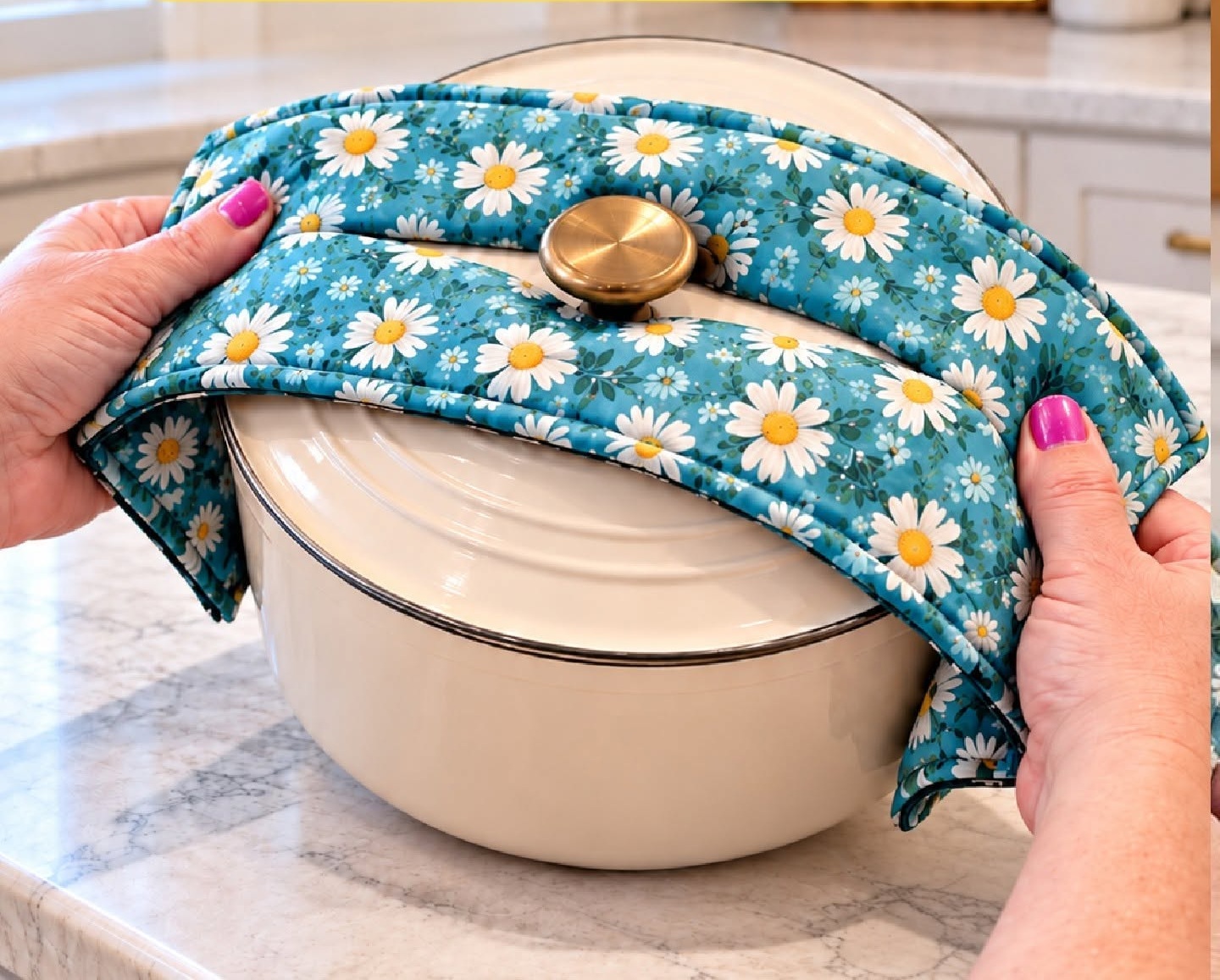
One advantage of a fabric pot handle protector pattern is the opportunity to customize the finished design. Floral prints, geometric patterns, seasonal fabrics, and neutral colors can all work well, depending on your kitchen decor. You can also create matching accessories for a coordinated handmade collection.
Care instructions depend on the fabric and insulating material you choose. Follow the manufacturer’s recommendations for washing and drying, and inspect the protector regularly for worn fabric, damaged seams, or compressed insulation. Replace the item if its protective properties appear compromised.
Safety should always come first when using a fabric pot handle cover. Fabric protectors are not automatically heatproof, and they should not be used near open flames, hot heating elements, or in an oven unless the complete product is specifically designed and rated for that use. Keep the protector dry, and never assume that it makes every hot handle safe to touch.
Frequently Asked Questions
What is a Fabric Pot Handle Protector Pattern?
A Fabric Pot Handle Protector Pattern provides instructions for sewing a fabric cover designed to fit a particular cookware handle. Its construction and materials determine its suitability for different applications.
Which fabric is best for a pot handle protector?
Cotton fabric is commonly used for the outer layer because it is easy to sew. The insulating layer should be specifically designed and rated for the intended heat exposure.
Can beginners sew a fabric pot handle protector?
Yes. Many designs use basic cutting and sewing techniques, making them suitable for beginners who are comfortable following a pattern and measuring fabric accurately.
Can I wash a handmade pot handle protector?
That depends on the fabric and insulating material. Follow the manufacturer’s care instructions and check that washing will not damage the protective layers.
Can I use a fabric handle protector on any cookware?
No. The protector must fit the handle securely and be appropriate for the cookware’s temperature and intended use. Some handles become too hot for ordinary fabric accessories to protect against safely.
How can I make my pot handle protector last longer?
Use suitable materials, sew secure seams, follow the recommended cleaning instructions, and inspect the item regularly for wear or damage.
Extra Tips for a Successful Sewing Project
Planning your fabric pot handle protector sewing pattern before cutting the material can save time and reduce waste. Prepare a paper template, double-check your measurements, and test the fit using inexpensive scrap fabric if necessary. This approach allows you to make adjustments before working with your final materials.
If you are making several DIY pot handle protectors, consider creating a consistent template for each cookware size. You can experiment with different outer fabrics while maintaining the same basic construction. Remember that every version must use suitable insulating materials and fit the intended handle securely.
Organizing your sewing area also makes the project more enjoyable. Keep your scissors, thread, measuring tape, and fabric pieces within reach. Working carefully and checking each stage before moving forward can help you achieve a neat, attractive result.
Common Mistakes to Avoid When Making a Pot Handle Protector
One common mistake is choosing materials based only on their appearance. A decorative fabric may look attractive but may not provide adequate heat protection. Always select materials according to their intended use and the manufacturer’s specifications.
Another mistake is making the cover too large or too small. An oversized protector may slip off, while a tight cover may be difficult to position correctly. Accurate measurements and a test fit can help you avoid these problems.
Finally, never assume that additional fabric layers automatically make a protector safe for every temperature. A fabric pot handle protector should only be used within the limits specified for its materials and construction. Replace damaged accessories and avoid using them when they are wet or worn.
Conclusion
A Fabric Pot Handle Protector Pattern is a practical sewing project that combines creativity, personalization, and everyday kitchen use. By selecting appropriate materials, measuring carefully, following suitable sewing techniques, and maintaining the finished accessory, you can create a useful handmade item that complements your kitchen.
Have you ever sewn your own kitchen accessories, or are you planning to try a fabric pot handle protector for the first time? Share your honest opinions, favorite fabric ideas, and suggestions in the comments. Your experience may inspire other readers to explore practical sewing projects for their homes.