A crochet horse rug pattern is a wonderful project for anyone who loves horses, handmade home décor, and creative crochet designs. A horse-themed rug can bring a rustic, country-inspired touch to a bedroom, reading corner, craft room, or farmhouse-style interior.
One of the best things about a horse crochet rug is its versatility. You can create a small decorative mat for a bedroom, a soft accent for a hobby room, or a larger rug inspired by the beauty of horses. Using durable yarn and a suitable stitch pattern can also help the finished rug maintain its shape.
This crochet horse rug tutorial explains how to select materials, plan the horse design, crochet the rug, and finish the edges. The instructions focus on a beginner-friendly approach that can be adapted to different sizes and skill levels.
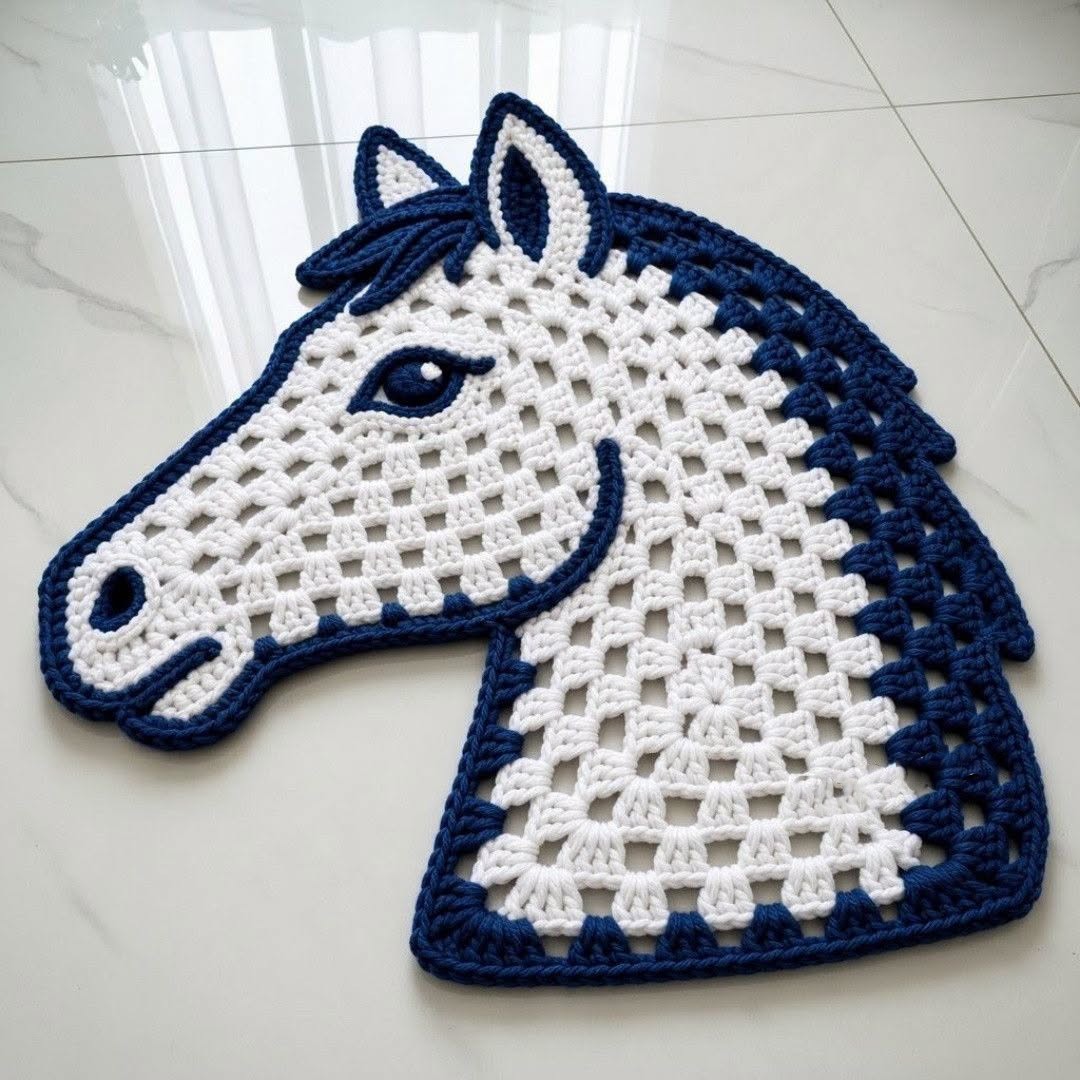
Materials Needed for a Crochet Horse Rug
To make a crochet horse rug, choose a durable yarn that feels comfortable and is suitable for the intended location. Cotton yarn is useful for decorative mats because it offers good stitch definition, while washable acrylic yarn can be a practical option for indoor rugs. For a larger project, bulky yarn may help the rug grow faster, although it will require a larger crochet hook. Always check the yarn label for recommended hook sizes and care instructions.
You will also need a crochet hook, scissors, a yarn needle, and a measuring tape. If you want to create a horse silhouette, prepare yarn in a main background color and one or more contrasting shades for the horse. Brown against cream creates a classic equestrian look, while black against white produces a bold design. Using leftover yarn can also help reduce material costs, especially when making a multicolored pattern.
Before beginning, decide on the rug’s dimensions and shape. A rectangular rug is relatively straightforward for beginners, while an oval or horse-shaped outline requires additional shaping. If the rug will be placed on a smooth floor, consider adding a suitable non-slip rug backing after completing the crochet work. Avoid placing a loose or slippery handmade rug where it could create a tripping hazard.
Choosing the Horse Design and Crochet Stitches
The first design decision is whether you want a horse silhouette, a horse-head motif, or a simple pattern with small horse-themed details. A silhouette is often easier to plan because it uses contrasting colors to create the recognizable outline of a horse. You can sketch the design on graph paper, with each square representing a stitch or small group of stitches. This approach helps you estimate the rug’s width and position the horse in the center.
For the rug itself, single crochet is a useful stitch because it creates a firm, dense fabric. Half double crochet works up faster and produces a slightly softer texture, while slip stitches can help join pieces or finish edges. If you are new to crochet, practice your chosen stitch with a small sample before beginning the full rug. Consistent tension is especially important because uneven stitches can cause the edges to curl.
If you want to include a horse image, you can work the motif directly into the rug using color changes or crochet a separate horse-shaped piece and attach it to the background. Color changes require attention to the pattern, but they create a smooth integrated design. An appliqué can be easier for beginners and allows you to adjust the horse’s position before sewing it securely in place.
Step-by-Step Instructions for Crocheting the Rug
Begin by making a foundation chain that matches the planned width of your rug. Work your chosen stitch across the chain, then turn and continue row by row until the base reaches the desired length. Count your stitches periodically and measure the fabric as it grows. If the sides begin to narrow or widen unexpectedly, check your stitch count and make sure you are working into the correct stitches at the ends of each row.
Next, add the horse motif according to your chosen design. For a colorwork silhouette, follow your graph and change yarn colors where the horse’s outline begins and ends. Keep unused yarn manageable on the back of the work and avoid pulling it too tightly, since tight strands can distort the rug. If you prefer an appliqué, crochet the horse separately, weave in the loose ends, and sew it onto the center of the completed base with secure stitches.
Once the main rug is finished, crochet a border around the outer edge to create a neat appearance. A round of single crochet can help even out the edges, while a contrasting border can frame the horse motif. Weave in all loose yarn ends and check for gaps or loose stitches. Allow the rug to lie flat before using it, and add a compatible non-slip backing if necessary for your flooring.
Finishing, Decorating, and Caring for Your Horse Rug
Finishing details can make a handmade crochet horse rug look more polished. You might add a contrasting border, a small saddle-inspired detail, or a simple mane created with carefully secured yarn strands. Keep raised decorations minimal if the rug will be walked on, since bulky features can affect comfort and wear. For a rug displayed on a wall or used only as decoration, you have more freedom to experiment with textured stitches and dimensional details.
Color selection can also change the mood of the finished piece. Earthy browns and muted greens suit rustic interiors, while cream and charcoal create a more modern appearance. For a child’s room, a simplified horse silhouette in cheerful colors can create a playful accent. If you plan to make the rug as a gift, consider the recipient’s favorite horse breed, color palette, or decorating style when choosing the final design.
Care for the finished rug according to the yarn manufacturer’s recommendations. Some yarns can be gently machine washed, while others require hand washing or spot cleaning. Avoid excessive heat if the yarn could shrink or lose its shape, and dry the rug thoroughly before putting it back on the floor. Regularly inspect the border and backing to ensure they remain secure, especially if the rug is used frequently.
Frequently Asked Question
Is a crochet horse rug suitable for beginners?
Yes. Beginners can start with a rectangular rug using single crochet and add a simple horse appliqué instead of working a complex color pattern.
What yarn is best for a crochet rug?
Durable cotton or washable acrylic yarn can work well, depending on the rug’s intended use. Always check the yarn label before choosing a cleaning method.
How can I create a horse silhouette?
Use graph paper to plan the outline, then follow the design with contrasting yarn. Alternatively, crochet a separate horse motif and sew it onto the rug.
How do I keep my crochet rug from slipping?
Use a suitable non-slip rug backing designed for your floor type, and make sure the backing is compatible with the yarn and rug construction.
Can I customize the size of the pattern?
Yes. Adjust the foundation chain and the number of rows to change the dimensions. Keep in mind that changing yarn thickness or hook size will also affect the finished measurements.
Conclusion
A crochet horse rug pattern offers an enjoyable way to combine practical crochet skills with a love of horses. By selecting durable yarn, planning a clear motif, and finishing the edges carefully, you can create a distinctive rug for your home or a thoughtful handmade gift.
Start with a simple shape and gradually experiment with colorwork, borders, and decorative details as your skills develop. If you try this pattern, share your honest opinions and suggestions. Your feedback may inspire other crochet lovers to create their own horse-themed rugs.