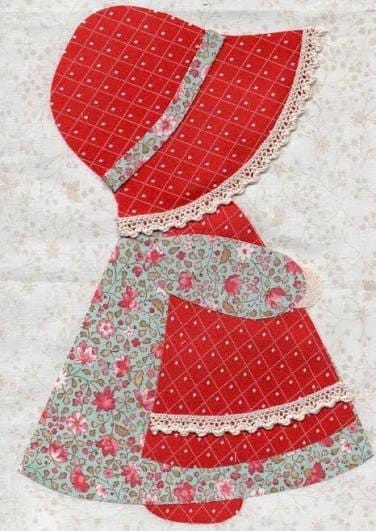
Sunbonnet Sue Quilt Pattern is one of the most beloved quilt designs in the world of patchwork, celebrated for its timeless charm, nostalgic appeal, and endless creative possibilities. The beautiful project shown in the inspiration image features the classic Sunbonnet Sue silhouette wearing a soft blue dress, matching bonnet, delicate floral fabrics, and elegant lace trim.
This traditional design has remained a favorite among quilters for generations because it combines simple appliqué techniques with beautiful fabric combinations that create a warm, handmade look. A Sunbonnet Sue Quilt Pattern is perfect for quilters who enjoy combining traditional craftsmanship with modern fabric collections.
Whether you choose vintage floral prints, soft pastel colors, or contemporary fabrics, this pattern can easily be adapted to match your personal style. The sample shown uses coordinated blue fabrics and subtle floral prints that give the finished block a delicate, classic appearance suitable for baby quilts, wall hangings, pillows, table runners, or heirloom blankets.
Individual blocks can be repeated to form an entire quilt, or a single appliqué can become the centerpiece of a decorative sewing project. Throughout this guide, you’ll learn how to recreate a quilt block inspired by the image while mastering useful appliqué and quilting techniques that can be applied to many future patchwork projects.
Materials Needed for a Sunbonnet Sue Quilt Pattern
Before beginning your Sunbonnet Sue Quilt Pattern, gather all the materials needed to achieve a professional-looking result.
Choose high-quality quilting cotton for the dress, bonnet, apron, and background fabric. Cotton fabrics are easy to sew, press beautifully, and provide excellent durability.
Lightweight fusible web or appliqué paper helps secure each fabric piece before stitching, making placement much easier, especially for beginners.
You’ll also need matching sewing thread, fabric scissors, rotary cutter, cutting mat, quilting ruler, sewing machine, pins or fabric clips, and a warm iron for pressing every stage of the project.
Optional embellishments such as lace trim, decorative embroidery, small buttons, or delicate ribbon can enhance the vintage appearance, just as the lace details beautifully frame the dress and bonnet in the inspiration image.
Finally, prepare quilt batting and backing fabric if your completed block will become part of a finished quilt or decorative wall hanging.
Step-by-Step Instructions for the Sunbonnet Sue Quilt Pattern
Start your Sunbonnet Sue Quilt Pattern by preparing the individual template pieces for the bonnet, dress, apron, and sleeves. Carefully trace each shape onto the fusible web according to the manufacturer’s instructions.
Cut each fabric slightly larger than its template before fusing the pieces to the wrong side of the selected fabrics. Once cooled, trim accurately along the template lines.
Arrange all the appliqué pieces on the background fabric before permanently attaching them. This allows you to adjust positioning until the proportions closely resemble the inspiration design.
Fuse or pin each piece into place and stitch around the edges using a blanket stitch, satin stitch, or narrow zigzag stitch. Take your time around curves to achieve smooth, clean edges.
After completing the appliqué, add decorative lace along the bonnet brim and dress hem if desired. These small details beautifully emphasize the vintage style shown in the image.
Finish the block by pressing thoroughly and quilting it with your preferred quilting design before assembling it into a larger quilt or sewing project.
Creative Ways to Personalize Your Sunbonnet Sue Quilt Pattern
One of the greatest strengths of a Sunbonnet Sue Quilt Pattern is how easily it can be customized.
Experiment with different floral prints, gingham fabrics, polka dots, or seasonal colors to create completely unique quilt blocks.
Instead of a traditional blue dress, consider soft pinks, lavender, sage green, or warm autumn tones to coordinate with different quilt themes.
Decorative embroidery can be added to the apron or bonnet for additional texture and handcrafted charm.
Many quilters create themed collections featuring different fabric combinations while maintaining the same classic Sunbonnet Sue silhouette throughout the quilt.
You can also transform individual blocks into pillows, tote bags, nursery décor, table runners, or framed textile art for beautiful handmade gifts.
Finishing Tips and Care Instructions
Careful finishing enhances the overall appearance of your Sunbonnet Sue Quilt Pattern while improving its durability.
Press each seam and appliqué section gently throughout the construction process to maintain crisp edges and smooth fabric surfaces.
Use high-quality thread for appliqué stitching to ensure long-lasting seams that withstand years of use.
Trim loose threads carefully after quilting to maintain a clean and professional finish.
If washing becomes necessary, use a gentle cycle with cold water or hand wash delicate quilted projects to preserve both fabrics and embellishments.
Store the finished quilt flat or loosely folded in a cool, dry place away from prolonged direct sunlight to help maintain its beautiful colors.
Frequently Asked Questions
Is the Sunbonnet Sue Quilt Pattern beginner-friendly?
Yes. Beginners with basic sewing experience can successfully complete this project by following simple appliqué techniques and careful fabric placement.
What fabric works best?
High-quality quilting cotton is the preferred choice because it presses well, is easy to sew, and provides long-lasting durability.
Can I hand sew the appliqué?
Absolutely. Many traditional quilters prefer hand appliqué for its classic appearance and detailed finish.
Can I resize the pattern?
Yes. The templates can easily be enlarged or reduced to create larger quilt blocks, pillows, or miniature projects.
Is this pattern suitable for baby quilts?
Yes. The gentle, classic design makes it an excellent choice for nursery quilts and children’s keepsakes.
Can I add decorative embellishments?
Certainly. Lace, embroidery, ribbons, decorative stitches, and fabric layering all add extra character while maintaining the timeless charm of the Sunbonnet Sue Quilt Pattern.
Creating a Sunbonnet Sue Quilt Pattern is a rewarding experience that combines traditional quilting techniques with endless opportunities for creativity. Every completed block tells a story through carefully selected fabrics, delicate appliqué work, and thoughtful decorative details. Whether you are making a treasured family heirloom, a nursery quilt, or a decorative wall hanging, this timeless pattern offers both beauty and versatility while helping you strengthen your quilting skills and appreciation for classic patchwork traditions.
One of the reasons the Sunbonnet Sue Quilt Pattern has remained a favorite among quilters for generations is its incredible versatility. While the traditional design is beautiful on its own, you can personalize every block with different fabric combinations, embroidery details, lace trims, or appliqué accents to create a quilt that reflects your own style. Many quilters also enjoy mixing vintage-inspired florals with modern prints, resulting in a project that feels both timeless and unique.
Conclusion
A Sunbonnet Sue Quilt Pattern remains one of the most cherished designs in traditional quilting because of its graceful appearance, nostalgic charm, and remarkable versatility. By following the step-by-step process outlined in this guide, you can recreate a beautiful appliqué block inspired by the image while adding your own unique fabrics, colors, and decorative accents. From selecting coordinated materials to carefully stitching each appliqué piece and adding elegant finishing touches, every stage contributes to a project that can be treasured for years to come.
VIDEO TUTORIAL
Whether your finished creation becomes part of a full-sized quilt, a decorative pillow, or a heartfelt handmade gift, this classic design is sure to bring warmth and timeless beauty to your sewing collection. We hope this tutorial inspires your next quilting project. Feel free to share your honest opinion, creative ideas, and suggestions for future sewing and quilting patterns.